
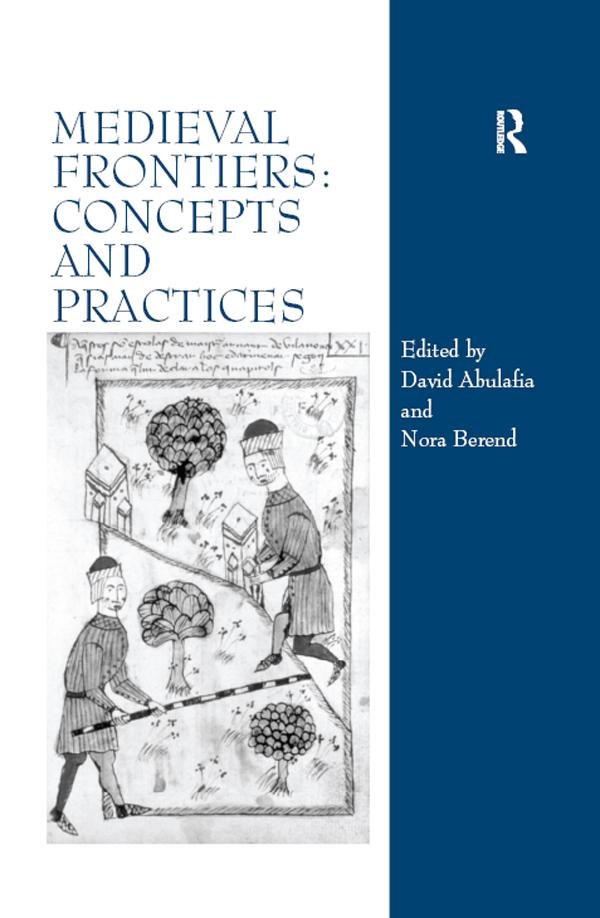
In recent years, the 'medieval frontier' has been the subject of extensive research. But the term has been understood in many different ways: political boundaries; fuzzy lines across which trade, religions and ideas cross; attitudes to other peoples and their customs. This book draws attention to the differences between the medieval and modern understanding of frontiers, questioning the traditional use of the concepts of 'frontier' and 'frontier society'. It contributes to the understanding of physical boundaries as well as metaphorical and ideological frontiers, thus providing a background to present-day issues of political and cultural delimitation. In a major introduction, David Abulafia analyses these various ambiguous meanings of the term 'frontier', in political, cultural and religious settings. The articles that follow span Europe from the Baltic to Iberia, from the Canary Islands to central Europe, Byzantium and the Crusader states. The authors ask what was perceived as a frontier during the Middle Ages? What was not seen as a frontier, despite the usage in modern scholarship? The articles focus on a number of themes to elucidate these two main questions. One is medieval ideology. This includes the analysis of medieval formulations of what frontiers should be and how rulers had a duty to defend and/or extend the frontiers; how frontiers were defined (often in a different way in rhetorical-ideological formulations than in practice); and how in certain areas frontier ideologies were created. The other main topic is the emergence of frontiers, how medieval people created frontiers to delimit areas, how they understood and described frontiers. The third theme is that of encounters, and a questioning of medieval attitudes to such encounters. To what extent did medieval observers see a frontier between themselves and other groups, and how does real interaction compare with ideological or narrative formulations of such interaction?
Betal nemt med kort, Klarna, Apple Pay eller Google Pay. Ikke tilfreds? Du har altid 14 dages fortrydelsesret. Læs mere i vores vilkår. Har du spørgsmål, så send os en mail på hello@memmo.org.
Memmo gør det nemmere at studere – uanset hvor du er i verden. Hos os samler du dine kursusbøger og smarte studieværktøjer ét sted: resuméer, quizzer, podcasts og flashcards. Og så er der Ted, din studieven, der svarer på alt, du undrer dig over. Over 50 000 studerende studerer allerede her – bygget til at hjælpe dig med at lære hurtigere og stresse mindre.
Du kan måske også lide
Køb bogen0