
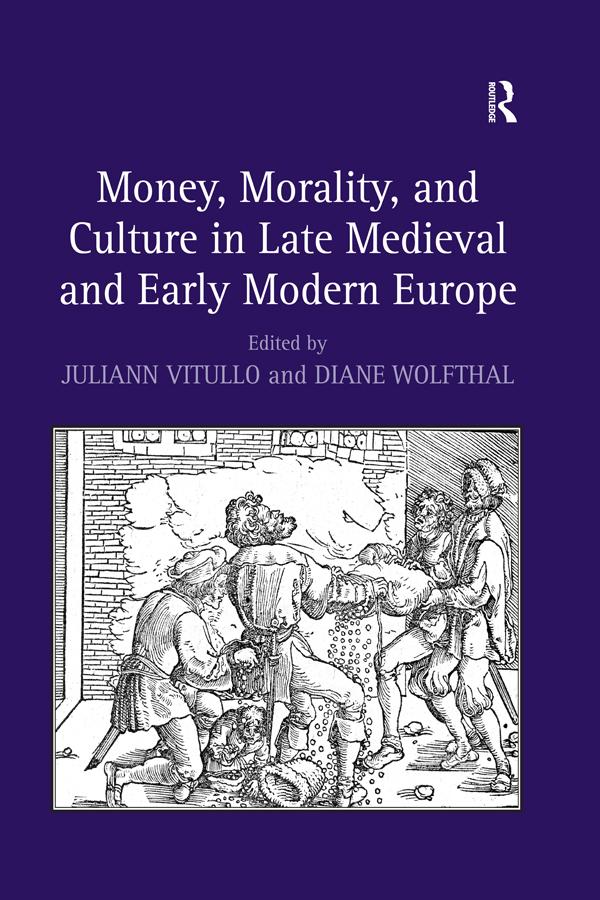
One of the first volumes to explore the intersection of economics, morality, and culture, this collection analyzes the role of the developing monetary economy in Western Europe from the twelfth to the seventeenth century. The contributors”scholars from the fields of history, literature, art history and musicology”investigate how money infiltrated every aspect of everyday life, modified notions of social identity, and encouraged debates about ethical uses of wealth. These essays investigate how the new symbolic system of money restructured religious practices, familial routines, sexual activities, gender roles, urban space, and the production of literature and art. They explore the complex ethical and theological discussions which developed because the role of money in everyday life and the accumulation of wealth seemed to contradict Christian ideals of poverty and charity, revealing a rich web of reactions to the tensions inherent in a predominately Christian, (neo)capitalist culture. Money, Morality, and Culture in Late Medieval and Early Modern Europe presents a comprehensive, multi-disciplinary assessment of the ways in which the rise of the monetary economy fundamentally affected morality and culture in Western Europe.
Betal nemt med kort, Klarna, Apple Pay eller Google Pay. Ikke tilfreds? Du har altid 14 dages fortrydelsesret. Læs mere i vores vilkår. Har du spørgsmål, så send os en mail på hello@memmo.org.
Memmo gør det nemmere at studere – uanset hvor du er i verden. Hos os samler du dine kursusbøger og smarte studieværktøjer ét sted: resuméer, quizzer, podcasts og flashcards. Og så er der Ted, din studieven, der svarer på alt, du undrer dig over. Over 50 000 studerende studerer allerede her – bygget til at hjælpe dig med at lære hurtigere og stresse mindre.
Du kan måske også lide
Køb bogen0