
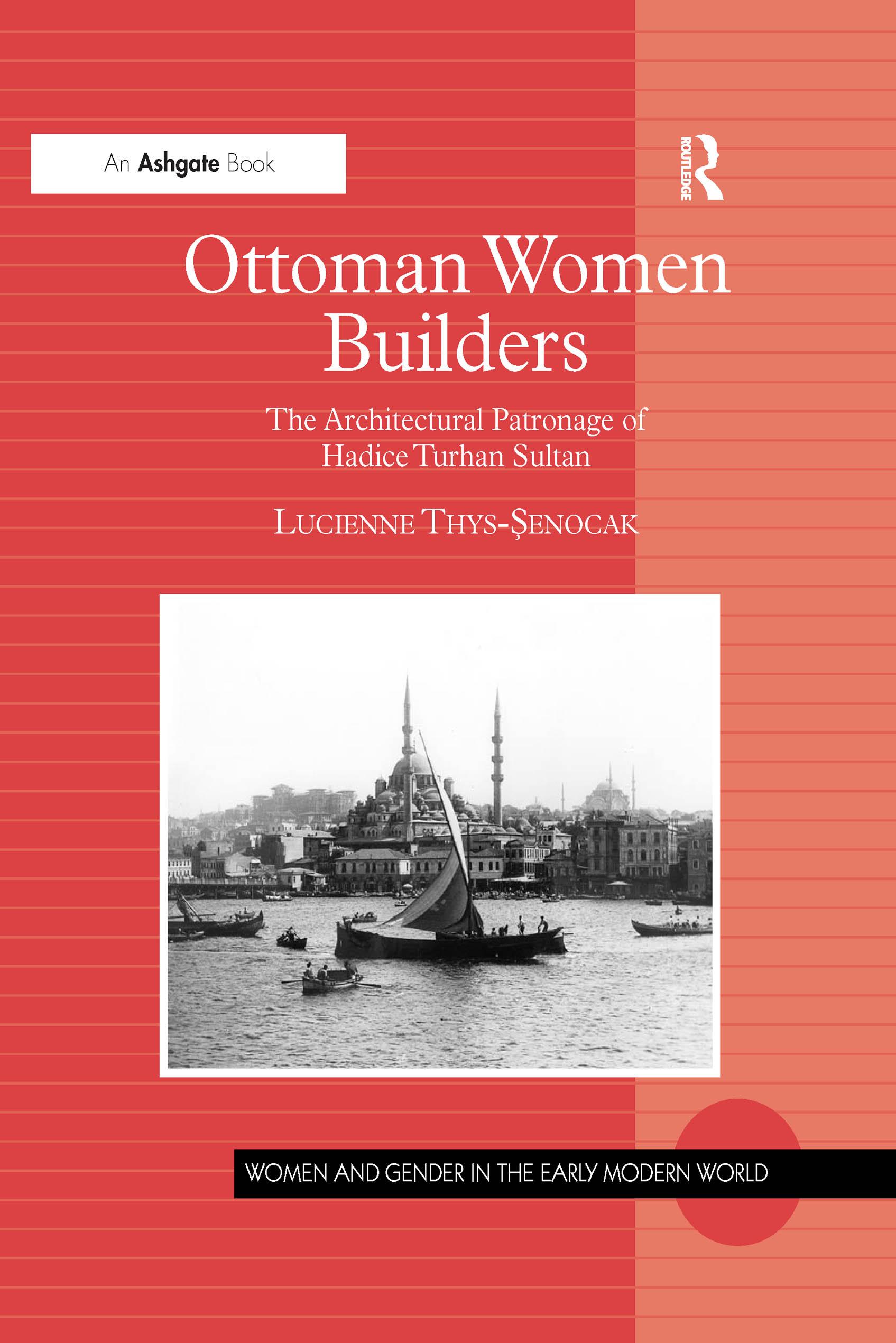
Examined here is the historical figure and architectural patronage of Hadice Turhan Sultan, the young mother of the Ottoman Sultan Mehmed IV, who for most of the latter half of the seventeenth century shaped the political and cultural agenda of the Ottoman court. Captured in Russia at the age of twelve, she first served the reigning sultan's mother in Istanbul. She gradually rose through the ranks of the Ottoman harem, bore a male child to Sultan Ibrahim, and came to power as a valide sultan, or queen mother, in 1648. It was through her generous patronage of architectural works-including a large mosque, a tomb, a market complex in the city of Istanbul and two fortresses at the entrance to the Dardanelles-that she legitimated her new political authority as a valide and then attempted to support that of her son. Central to this narrative is the question of how architecture was used by an imperial woman of the Ottoman court who, because of customary and religious restrictions, was unable to present her physical self before her subjects' gaze. In lieu of displaying an iconic image of herself, as Queen Elizabeth and Catherine de Medici were able to do, Turhan Sultan expressed her political authority and religious piety through the works of architecture she commissioned. Traditionally historians have portrayed the role of seventeenth-century royal Ottoman women in the politics of the empire as negative and de-stabilizing. But Thys-Senocak, through her examination of these architectural works as concrete expressions of legitimate power and piety, shows the traditional framework to be both sexist and based on an outdated paradigm of decline. Thys-Senocak's research on Hadice Turhan Sultan's two Ottoman fortresses of Seddülbahir and Kumkale improves in a significant way our understanding of early modern fortifications in the eastern Mediterranean region and will spark further research on many of the Ottoman fortifications built in the area. Plans and elevations of the fortresses are published and analysed here for the first time. Based on archival research, including letters written by the queen mother, many of which are published here for the first time, and archaeological fieldwork, her work is also informed by recent theoretical debates in the fields of art history, cultural history and gender studies.
Betal nemt med kort, Klarna, Apple Pay eller Google Pay. Ikke tilfreds? Du har altid 14 dages fortrydelsesret. Læs mere i vores vilkår. Har du spørgsmål, så send os en mail på hello@memmo.org.
Memmo gør det nemmere at studere – uanset hvor du er i verden. Hos os samler du dine kursusbøger og smarte studieværktøjer ét sted: resuméer, quizzer, podcasts og flashcards. Og så er der Ted, din studieven, der svarer på alt, du undrer dig over. Over 50 000 studerende studerer allerede her – bygget til at hjælpe dig med at lære hurtigere og stresse mindre.
Du kan måske også lide
Køb bogen0