
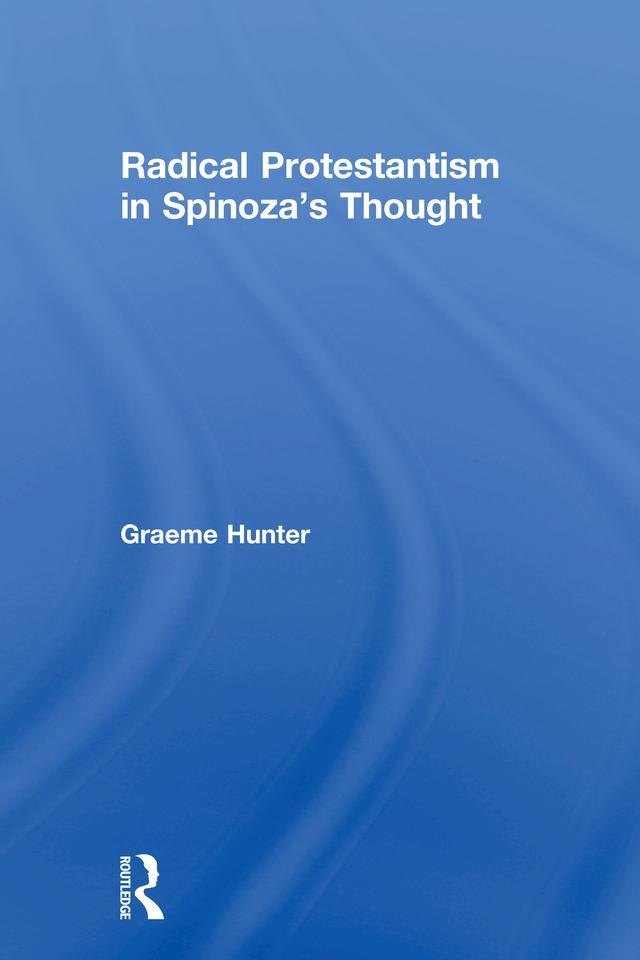
Spinoza is praised as a father of atheism, a precursor of the Enlightenment, an 'anti-theologian' and a father of political liberalism. When the religious dimension of Spinoza's thought cannot be ignored, it is usually dismissed as some form of mysticism or pantheism. This book explores the positive references to Christianity presented throughout Spinoza's works, focusing particularly on the Tractatus Theologico-politicus. Arguing that advocates of the anti-Christian or un-Christian Spinoza fail to look beyond Spinoza's ethics, which has the least to say about Christianity, Graeme Hunter offers a fresh interpretation of Spinoza's most important works and his philosophical and religious thought.  While there is no evidence that Spinoza became a Christian in any formal sense, Hunter argues that his aim was neither to be heretical nor atheistic, but rather to effect a radical reform of Christianity and a return to simple Biblical practices. This book presents a unique contribution to current debate for students and specialist scholars in philosophy of religion, the history of philosophy and early modern history.
Betal nemt med kort, Klarna, Apple Pay eller Google Pay. Ikke tilfreds? Du har altid 14 dages fortrydelsesret. Læs mere i vores vilkår. Har du spørgsmål, så send os en mail på hello@memmo.org.
Memmo gør det nemmere at studere – uanset hvor du er i verden. Hos os samler du dine kursusbøger og smarte studieværktøjer ét sted: resuméer, quizzer, podcasts og flashcards. Og så er der Ted, din studieven, der svarer på alt, du undrer dig over. Over 50 000 studerende studerer allerede her – bygget til at hjælpe dig med at lære hurtigere og stresse mindre.
Du kan måske også lide
Køb bogen0