
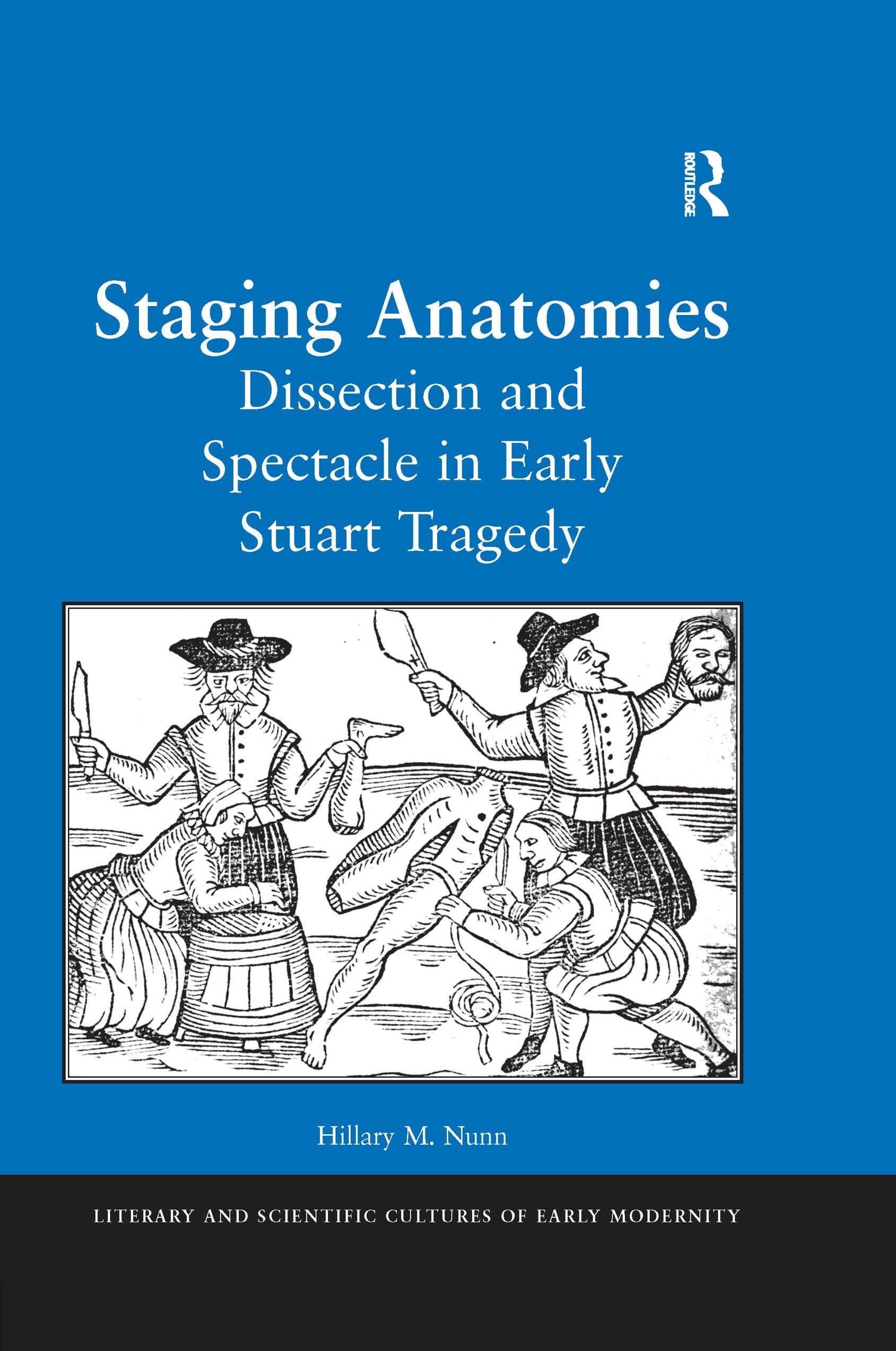
Hillary M. Nunn here traces the connections between the London public's interest in medical dissection and the changing cultural significance of bloodshed on the early Stuart playhouse stage. Considering the playhouses' role within the social world of early modern London, Nunn explores the influence of public dissection upon the presentation of human bodies in well-known plays such as King Lear, as well as in a wide range of often neglected early Stuart tragedies like The Second Maiden's Tragedy and Revenge for Honour. In addition to dramatic texts, the study draws heavily on anatomy treatises and popular pamphlets of the time. Incorporating views of anatomy's significance from a wide range of sources, this study shows the ways in which early Stuart dramatists called upon Londoners' increasing fascination with anatomical dissection to shape the staging of their tragedies.
Betal nemt med kort, Klarna, Apple Pay eller Google Pay. Ikke tilfreds? Du har altid 14 dages fortrydelsesret. Læs mere i vores vilkår. Har du spørgsmål, så send os en mail på hello@memmo.org.
Memmo gør det nemmere at studere – uanset hvor du er i verden. Hos os samler du dine kursusbøger og smarte studieværktøjer ét sted: resuméer, quizzer, podcasts og flashcards. Og så er der Ted, din studieven, der svarer på alt, du undrer dig over. Over 50 000 studerende studerer allerede her – bygget til at hjælpe dig med at lære hurtigere og stresse mindre.
Du kan måske også lide
Køb bogen0