
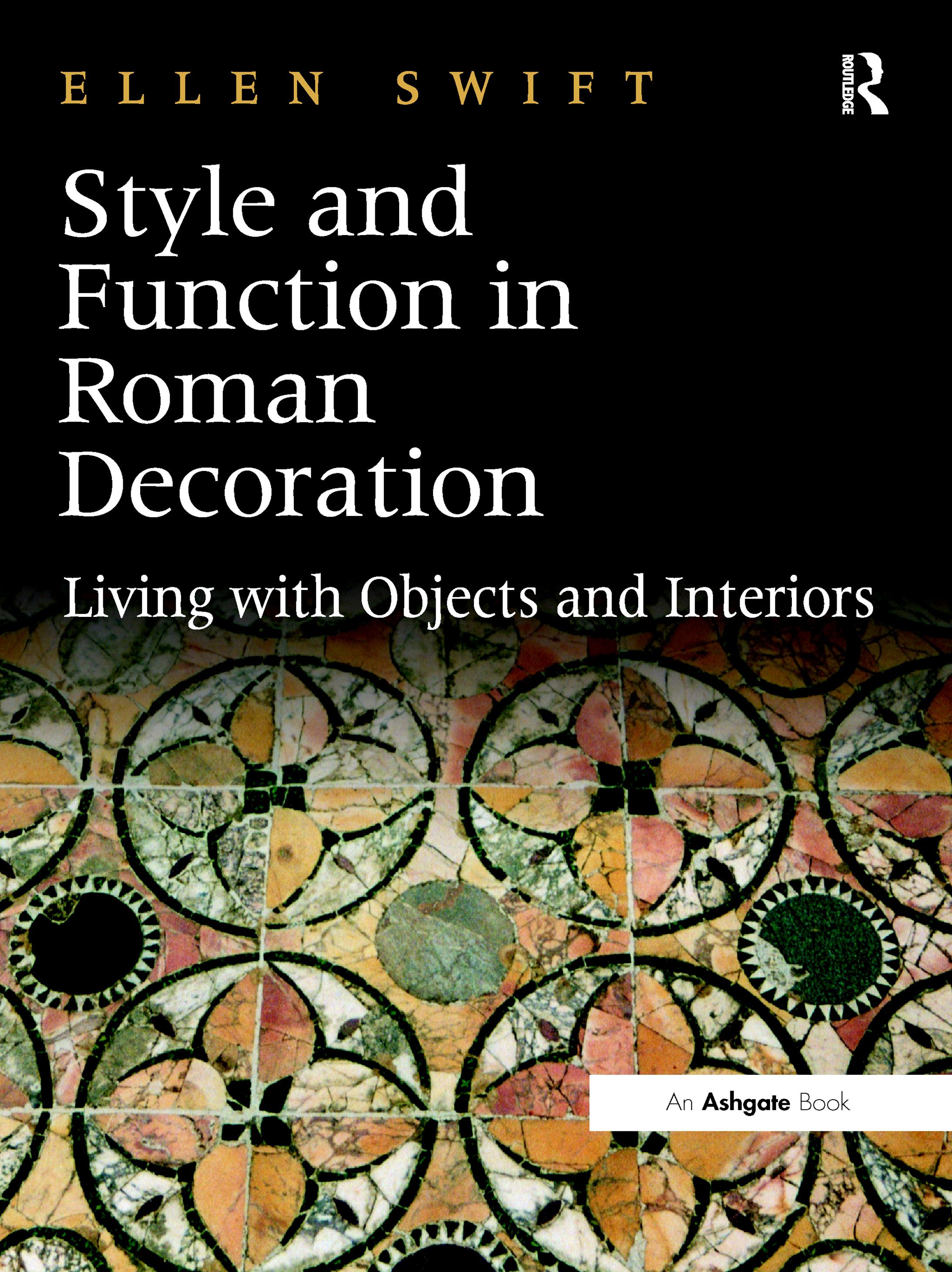
This important book puts forward a new interpretation of Roman decorative art, focusing on the function of decoration in the social context. It examines the three principal areas of social display and conspicuous consumption in the Roman world: social space, entertainment, and dress, and discusses the significance of the decoration of objects and interiors within these contexts, drawing examples from both Rome and its environs, and the Western provinces, from the early Imperial period to Late Antiquity. Focusing on specific examples, including mosaics and other interior décor, silver plate, glass and pottery vessels, and jewellery and other dress accessories, Swift demonstrates the importance of decoration in creating and maintaining social networks and identities and fostering appropriate social behaviour, and its role in perpetuating social convention and social norms. It is argued that our understanding of stylistic change and the relationship between this and the wider social context in the art of the Roman period is greatly enhanced by an initial focus on the particular social relationships fostered by decorated objects and spaces. The book demonstrates that an examination of so-called 'minor art' is fundamental in any understanding of the relationship between art and its social context, and aims to reinvigorate debate on the value of decoration and ornament in the Roman period and beyond.
Betal nemt med kort, Klarna, Apple Pay eller Google Pay. Ikke tilfreds? Du har altid 14 dages fortrydelsesret. Læs mere i vores vilkår. Har du spørgsmål, så send os en mail på hello@memmo.org.
Memmo gør det nemmere at studere – uanset hvor du er i verden. Hos os samler du dine kursusbøger og smarte studieværktøjer ét sted: resuméer, quizzer, podcasts og flashcards. Og så er der Ted, din studieven, der svarer på alt, du undrer dig over. Over 50 000 studerende studerer allerede her – bygget til at hjælpe dig med at lære hurtigere og stresse mindre.
Du kan måske også lide
Køb bogen0