
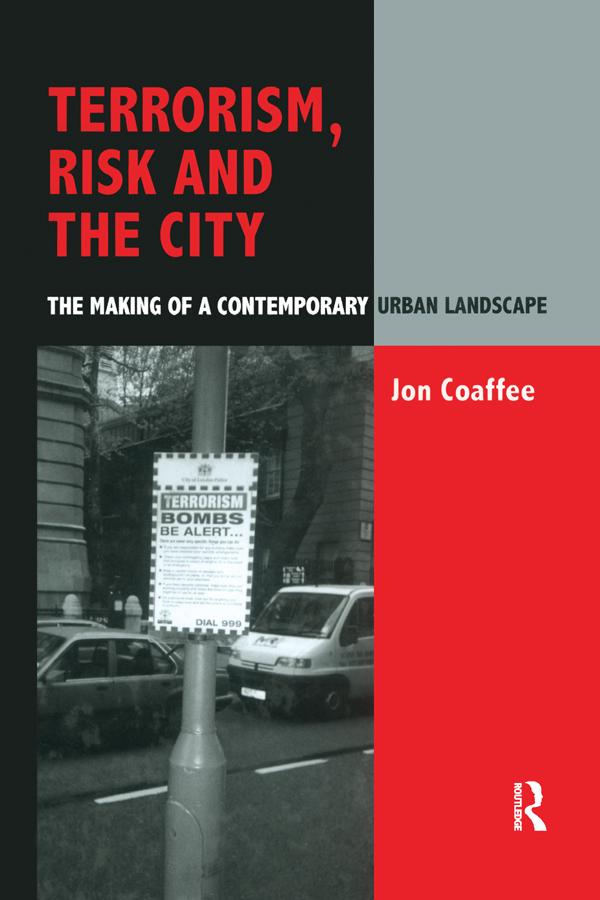
The development of defensive strategies encompassing the fortification and privatization of the city has attracted significant attention during recent years, and has become particularly relevant in the aftermath of September 11th. Dealing with issues of risk, security and the spatial restructuring of contemporary western cities, this book examines how the perceived risk of terrorist attack led to changes in the physical form and institutional infrastructure of the city of London during the 1990s when the city was a prime terrorist target. The book analyses how the various formal and informal strategies adopted in the City attempted to reduce both the physical and financial risk of terrorism. This was undertaken through a series of place-specific security initiatives and risk management policies which led to increased fortification, a substantial rise in terrorism insurance premiums, and, changing institutional relations at a variety of spatial scales. It also argues that the security measures deployed were developed not in terms of an anti-terrorist effort, but in relation to the unintended by-products of these approaches such as crime reduction and enhanced traffic management capabilities.
Betal nemt med kort, Klarna, Apple Pay eller Google Pay. Ikke tilfreds? Du har altid 14 dages fortrydelsesret. Læs mere i vores vilkår. Har du spørgsmål, så send os en mail på hello@memmo.org.
Memmo gør det nemmere at studere – uanset hvor du er i verden. Hos os samler du dine kursusbøger og smarte studieværktøjer ét sted: resuméer, quizzer, podcasts og flashcards. Og så er der Ted, din studieven, der svarer på alt, du undrer dig over. Over 50 000 studerende studerer allerede her – bygget til at hjælpe dig med at lære hurtigere og stresse mindre.
Du kan måske også lide
Køb bogen0