
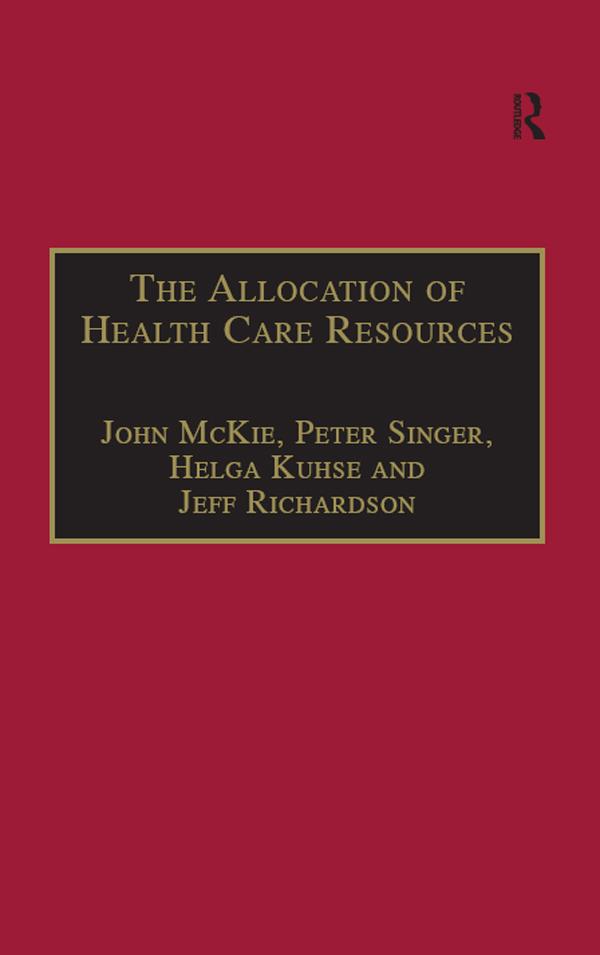
The competition for limited health care resources is intensifying. We urgently need an acceptable method for deciding how they should be allocated. But the goods that health care produces are of very different kinds. Health care can extend the lives of children and of older people. It can make it possible for a person to walk, when without health care that person would be permanently bedridden; and it can reduce the pain and distress of people who are terminally ill. How can we possibly decide which of these - and many more - diverse achievements of health care are more deserving than others? We need a common unit by which we might be able to measure these very different goods. The Quality-Adjusted Life Year, or QALY, is the most developed proposal for such a unit of measure. In this book a distinguished team of ethicists and economists defend the core of the QALY proposal: that health care resources should be used so as to produce more years of life, of the highest possible quality. This leads to a discussion of such fundamental questions as whether all lives are of equal value, whether health care should be allocated on the basis of need and whether the QALY approach incorporates an adequate account of fairness or justice. The result is the most thorough account yet of the ethical issues raised by the use of the QALY as a basis for allocating health care resources.
Betal nemt med kort, Klarna, Apple Pay eller Google Pay. Ikke tilfreds? Du har altid 14 dages fortrydelsesret. Læs mere i vores vilkår. Har du spørgsmål, så send os en mail på hello@memmo.org.
Memmo gør det nemmere at studere – uanset hvor du er i verden. Hos os samler du dine kursusbøger og smarte studieværktøjer ét sted: resuméer, quizzer, podcasts og flashcards. Og så er der Ted, din studieven, der svarer på alt, du undrer dig over. Over 50 000 studerende studerer allerede her – bygget til at hjælpe dig med at lære hurtigere og stresse mindre.
Du kan måske også lide
Køb bogen0