
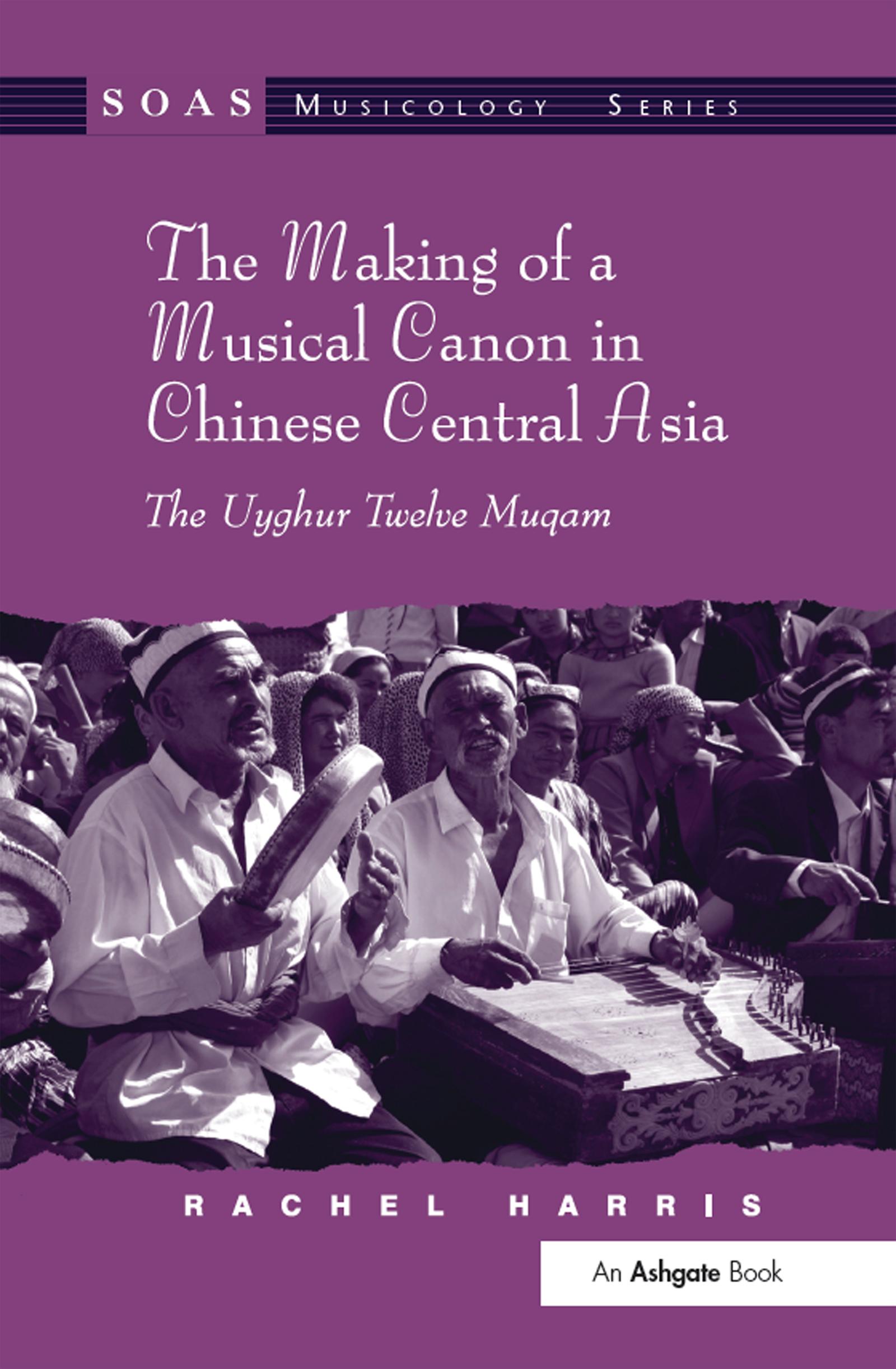
Throughout the course of the twentieth century, as newly formed nations sought ways to develop and formalise their national identity and acquire a range of identifiable national assets, we find new musical canons springing up across the world. But these canons are not arbitrary collections of works imposed on the public by the authorities. Rather they acquire deep resonance and meaning, both as national symbols and as musical repertoires imbued with aesthetic value. This book traces the formation of one such musical canon: the Twelve Muqam, a set of musical suites linked to the Uyghurs, who are one of China's minority nationalities, and culturally Central Asian Muslims. The book draws on Uyghur and Chinese language publications; interviews with musicians and musicologists; field, archive and commercial recordings, and aims towards an understanding of the Twelve Muqam as musical repertoire, juxtaposed with an understanding of the Twelve Muqam as a field of discourse. The book brings together several years' work in this field, but its core arises from a research project under the auspices of the AHRC Centre for Music Performance and Dance.
Betal nemt med kort, Klarna, Apple Pay eller Google Pay. Ikke tilfreds? Du har altid 14 dages fortrydelsesret. Læs mere i vores vilkår. Har du spørgsmål, så send os en mail på hello@memmo.org.
Memmo gør det nemmere at studere – uanset hvor du er i verden. Hos os samler du dine kursusbøger og smarte studieværktøjer ét sted: resuméer, quizzer, podcasts og flashcards. Og så er der Ted, din studieven, der svarer på alt, du undrer dig over. Over 50 000 studerende studerer allerede her – bygget til at hjælpe dig med at lære hurtigere og stresse mindre.
Du kan måske også lide
Køb bogen0