
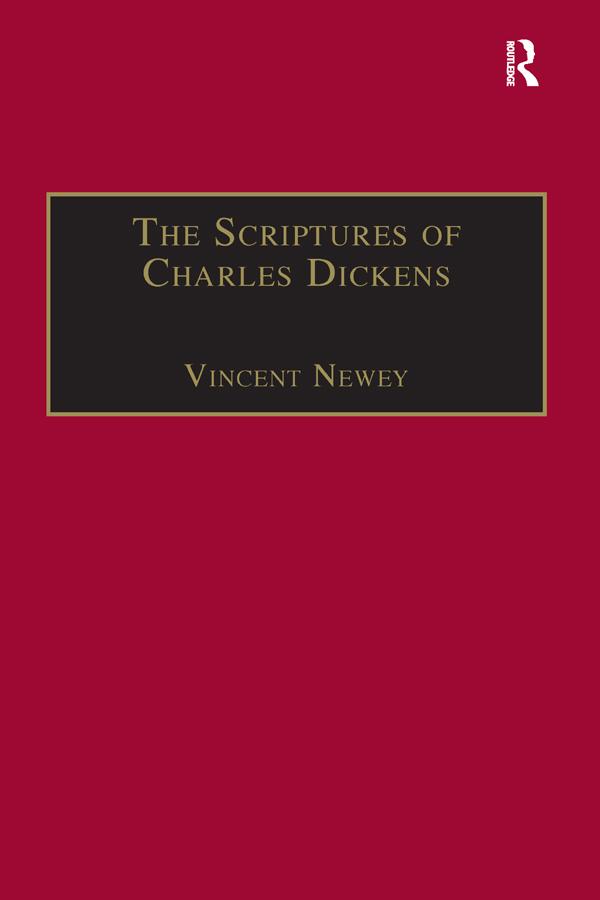
This study focuses on Dickens's response to questions of identity, conduct, and social organization that emerged in an era of major cultural unsettlement and change, not least with the decline of religious certainty and the rise of materialism. An analysis of A Christmas Carol as a paradigm of his concerns and strategies in these fields is followed by close readings of novels from different stages of his career, Oliver Twist, David Copperfield, Great Expectations and Our Mutual Friend. These, and other works by Dickens, are seen to reflect ideologies currently at work in his society but also, more importantly, to participate in the construction of needful value systems and codes for regulating behaviour. Liberal humanism and middle-class hegemony feature largely in this process of culture formation, where Dickens played a crucial role in formulating and promulgating such salient guiding principles as those of sympathy, marriage and the family, economic responsibility, and hierarchy within and between groups. His treatment of the self is on one level driven by this project in shaping and stabilizing attitudes among a confederacy of readers, in that it offers positive models of development, of how to function and fit in; yet on another, especially in his sustained imaginative preoccupation with the figure of the outsider or misfit, this is one pre-eminent area where his writing transcends purposes of enculturation and paradoxically challenges its own ideological positions. His female characters in particular, as well as more obviously his anti-heroes, criminals, and other dissidents, are shown to question and subvert the moulds in which they are formally cast. The novels are confirmed not only as great creative achievements, an aspect this book consistently salutes, nor simply as a primary site of the evolving Victorian dispensation and revolution of ideas, but as a territory that predicts, engages, and illuminates our own complex modernity. Reference is made throughout the volume to other contemporary writings, including sociological, philosophic, and medical discourse, to recent cognate theory, and to traditions, like that of Puritan spiritual autobiography, which Dickens adapted to new ends.
Sider: 328
Kategori: Litteraturvetenskap & Teori
e-ISBN: 9781351882224
Forsendelsesvægt: 1.2 kg
Sendes inden for: 1-2 dage
Betal nemt med kort, Klarna, Apple Pay eller Google Pay. Ikke tilfreds? Du har altid 14 dages fortrydelsesret. Læs mere i vores vilkår. Har du spørgsmål, så send os en mail på hello@memmo.org.
Memmo gør det nemmere at studere – uanset hvor du er i verden. Hos os samler du dine kursusbøger og smarte studieværktøjer ét sted: resuméer, quizzer, podcasts og flashcards. Og så er der Ted, din studieven, der svarer på alt, du undrer dig over. Over 50 000 studerende studerer allerede her – bygget til at hjælpe dig med at lære hurtigere og stresse mindre.
Du kan måske også lide
Køb bogen0