
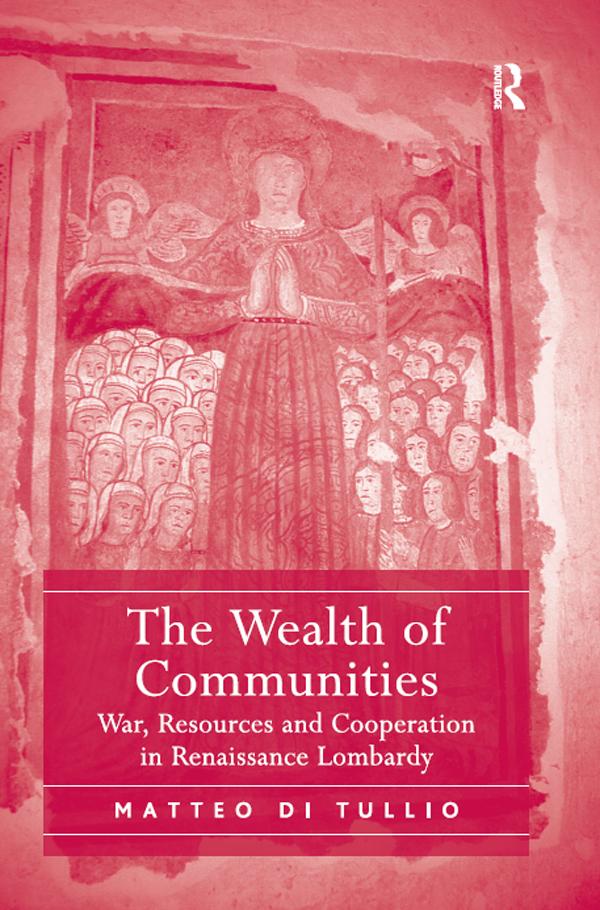
The early decades of the sixteenth century were a turbulent time for the Italian peninsula as competing centres of power struggled for political control. Nowhere was this more true than the area contested by Milan and Venice, that was constantly crossed and occupied by rival armies. Investigating the impact of successive crises upon the inhabitants of the Po Valley, this book challenges many fundamental assumptions about the relationship between war and economic development and draws conclusion that have implications for early modern Europe as a whole. In traditional historiography, periods of war and general crisis have often been regarded as promoting a shift in resources from the communal towards a small number of individuals. However, through a close micro-study of a single region, this book offers a different perspective. Rather than promoting an aggressive individualism, it is argued that in times of general crisis, social networks aimed to reproduce themselves and the original status quo by developing creative solutions and institutions favouring co-operation. Furthermore the elites could not always exploit ’local’ wealth because of the need to protect their position of leadership within the community, which required the preservation of that very community. This thesis not only challenges the received wisdom, but also fuels a new debate about the ways in which economic growth occurred in Early Modern Italy and Europe.
Betal nemt med kort, Klarna, Apple Pay eller Google Pay. Ikke tilfreds? Du har altid 14 dages fortrydelsesret. Læs mere i vores vilkår. Har du spørgsmål, så send os en mail på hello@memmo.org.
Memmo gør det nemmere at studere – uanset hvor du er i verden. Hos os samler du dine kursusbøger og smarte studieværktøjer ét sted: resuméer, quizzer, podcasts og flashcards. Og så er der Ted, din studieven, der svarer på alt, du undrer dig over. Over 50 000 studerende studerer allerede her – bygget til at hjælpe dig med at lære hurtigere og stresse mindre.
Du kan måske også lide
Køb bogen0