
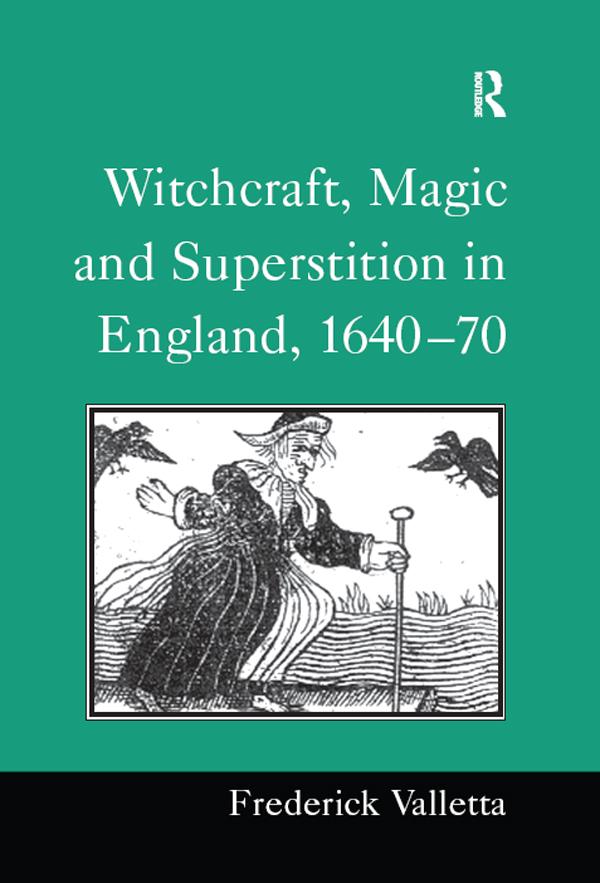
This study examines the relationship between élite and popular beliefs in witchcraft, magic and superstition in England, analyzing such beliefs against the background of political, religious and social upheaval characteristic of the Civil War, Interregnum and Restoration periods. Belief in witchcraft received new impulses because of the general ferment of religious ideas and the tendency of participants in the Civil Wars to resort to imagery drawn from beliefs about the devil and witches; or to use portents to argue for the wrongs of their opponents. Throughout the work, the author stresses that deeply held superstitions were fundamental to belief in witches, the devil, ghosts, apparitions and supernatural healing. Despite the fact that popular superstitions were often condemned, it was recognized that their propaganda value was too useful to ignore. A host of pamphlets and treatises were published during this period which unashamedly incorporated such beliefs. Valletta here explores the manner in which political and religious authorities somewhat cynically used demonic imagery and language to discredit their opponents and to manipulate popular opinion.
Betal nemt med kort, Klarna, Apple Pay eller Google Pay. Ikke tilfreds? Du har altid 14 dages fortrydelsesret. Læs mere i vores vilkår. Har du spørgsmål, så send os en mail på hello@memmo.org.
Memmo gør det nemmere at studere – uanset hvor du er i verden. Hos os samler du dine kursusbøger og smarte studieværktøjer ét sted: resuméer, quizzer, podcasts og flashcards. Og så er der Ted, din studieven, der svarer på alt, du undrer dig over. Over 50 000 studerende studerer allerede her – bygget til at hjælpe dig med at lære hurtigere og stresse mindre.
Du kan måske også lide
Køb bogen0