
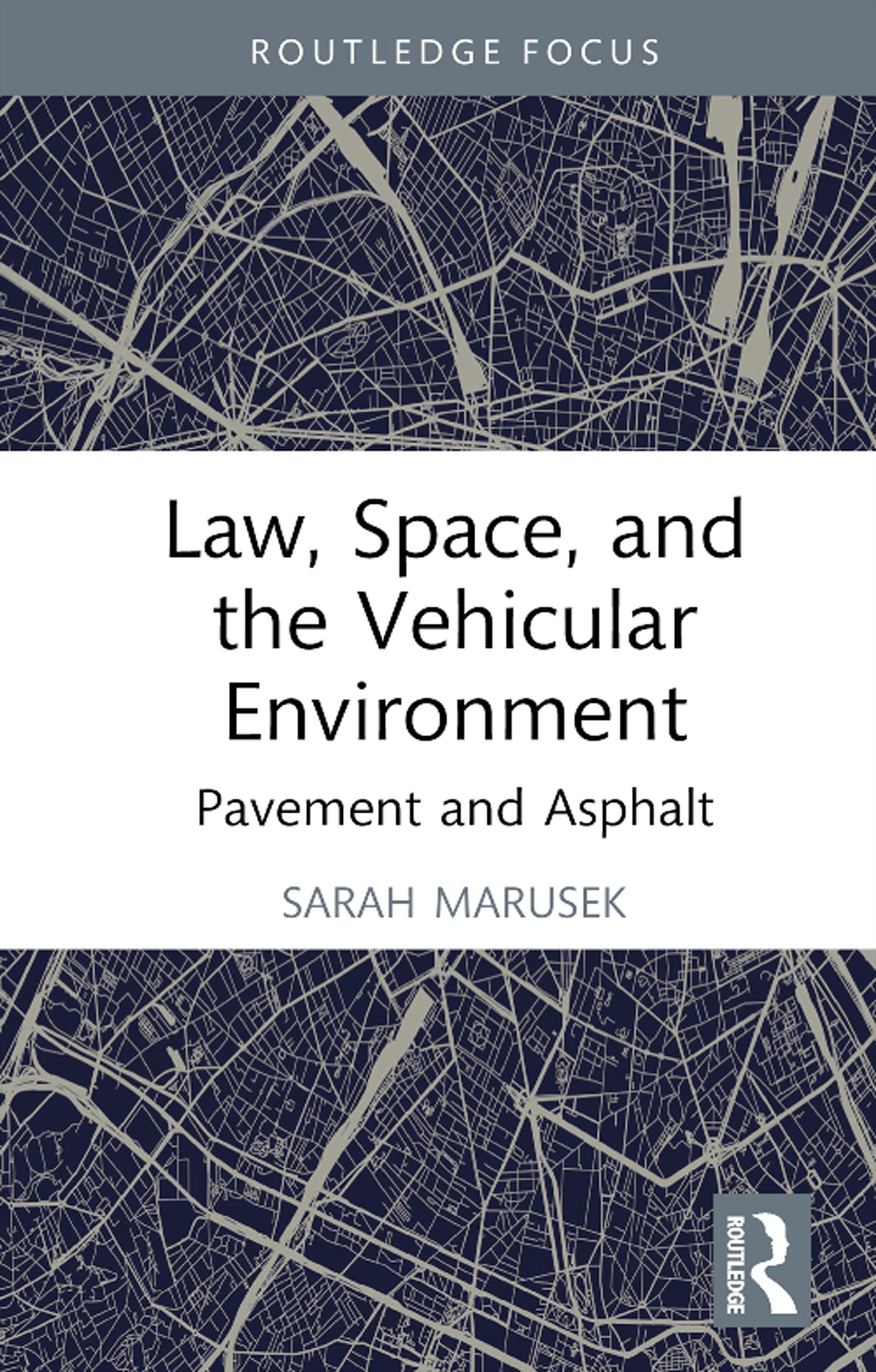
This book examines the paved road as a liminal space and legal frontier for enlivened, everyday struggles over property, power, and place/definition. Through pavement itself and the pavement-based practices of pavementalities and pavementeering, the road is legally framed as a place for movement.
Paved terrain is a site of dynamism between law and place that engenders the road as legal metaphor by calling forth the kinetic notion of jurisprudence in which law can be understood through the fluidity of everyday life. In Western (and particularly American) society, roads are a material locus of governance, in which rights of way are determined, communicated, and enforced. However, roads also constitute a site of resistance or disruption, beyond regulation. Addressing phenomena such as travel, political protest, public memory, and community governance, this book explores the paved medium of asphalt as a complex surface for legality that constitutively frames order against disorder involving jurisdiction tensions, property ownership, and cultural identities in vehicular environments.
The target audience of this book are those students and scholars who consider how law works in society, whether through frameworks of (auto) mobility and legal geography or through the interdisciplinary approaches of legal semiotics, legal culture, and/or new materialism.
Betal nemt med kort, Klarna, Apple Pay eller Google Pay. Ikke tilfreds? Du har altid 14 dages fortrydelsesret. Læs mere i vores vilkår. Har du spørgsmål, så send os en mail på hello@memmo.org.
Memmo gør det nemmere at studere – uanset hvor du er i verden. Hos os samler du dine kursusbøger og smarte studieværktøjer ét sted: resuméer, quizzer, podcasts og flashcards. Og så er der Ted, din studieven, der svarer på alt, du undrer dig over. Over 50 000 studerende studerer allerede her – bygget til at hjælpe dig med at lære hurtigere og stresse mindre.