
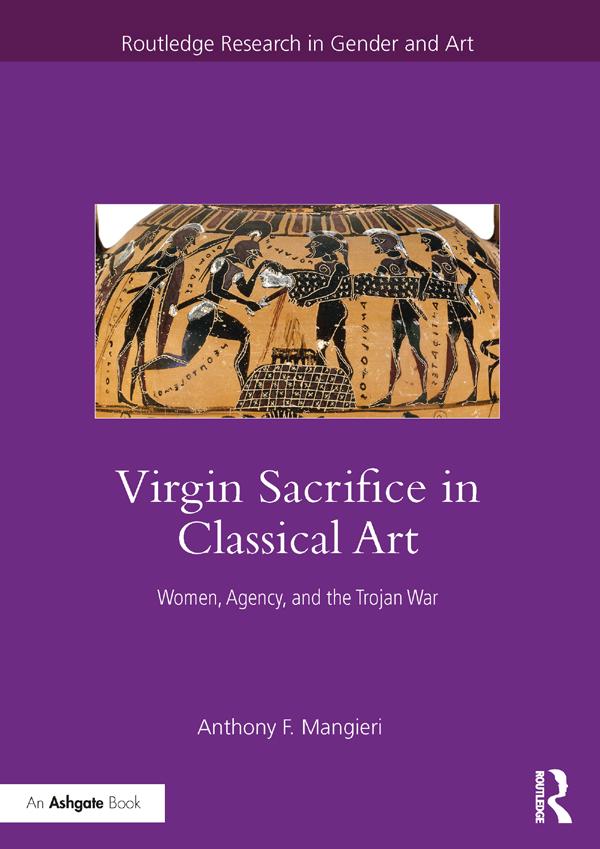
The Trojan War begins and ends with the sacrifice of a virgin princess. The gruesome killing of a woman must have captivated ancient people because the myth of the sacrificial virgin resonates powerfully in the arts of ancient Greece and Rome. Most scholars agree that the Greeks and Romans did not practice human sacrifice, so why then do the myths of virgin sacrifice appear persistently in art and literature for over a millennium? Virgin Sacrifice in Classical Art: Women, Agency, and the Trojan War seeks to answer this question.
This book tells the stories of the sacrificial maidens in order to help the reader discover the meanings bound up in these myths for historical people. In exploring the representations of Iphigeneia and Polyxena in Greek, Etruscan, and Roman art, this book offers a broader cultural history that reveals what people in the ancient world were seeking in these stories. The result is an interdisciplinary study that offers new interpretations on the meaning of the sacrificial virgin as a cultural and ideological construction. This is the first book-length study of virgin sacrifice in ancient art and the first to provide an interpretive framework within which to understand its imagery.
Betal nemt med kort, Klarna, Apple Pay eller Google Pay. Ikke tilfreds? Du har altid 14 dages fortrydelsesret. Læs mere i vores vilkår. Har du spørgsmål, så send os en mail på hello@memmo.org.
Memmo gør det nemmere at studere – uanset hvor du er i verden. Hos os samler du dine kursusbøger og smarte studieværktøjer ét sted: resuméer, quizzer, podcasts og flashcards. Og så er der Ted, din studieven, der svarer på alt, du undrer dig over. Over 50 000 studerende studerer allerede her – bygget til at hjælpe dig med at lære hurtigere og stresse mindre.