
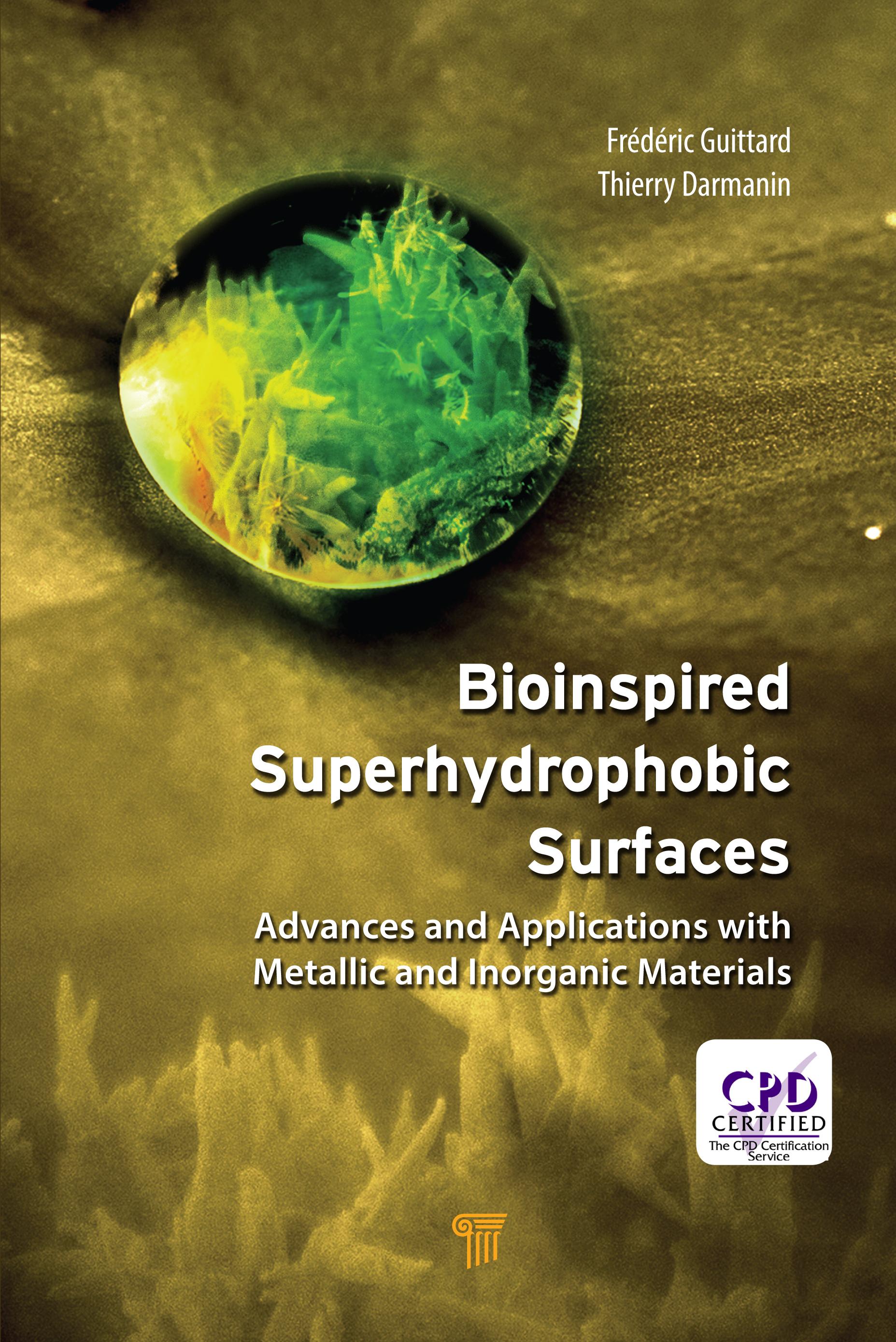
Materials with superhydrophobic or related properties are one of the most studied subjects from a theoretical point of view and also for the large range of possible applications, for example, anticorrosion, antibacteria, optical devices, and sensors. The study of natural species with special wettability has shown us the importance of surface structures and the surface energy of the resulting surface properties. Various strategies can be used to reproduce superhydrophobic phenomena in the laboratory. General reviews on superhydrophobic properties already exist but, to our knowledge, do not focus on metallic and inorganic materials. Here, we focus especially on the strategies implemented for reaching superhydrophobic or related properties using metallic and inorganic materials. Indeed, these materials present unique properties, for example, thermal and mechanical resistance, chemical and ageing resistance, and optical (transparency, antireflection, photoluminescence) and electrical properties (conducting, semiconducting, insulating).
This book will be useful for graduate students of materials chemistry and physics and for researchers in surface science, nanostructures, and bioinspired or biomimetic materials.
Betal nemt med kort, Klarna, Apple Pay eller Google Pay. Ikke tilfreds? Du har altid 14 dages fortrydelsesret. Læs mere i vores vilkår. Har du spørgsmål, så send os en mail på hello@memmo.org.
Memmo gør det nemmere at studere – uanset hvor du er i verden. Hos os samler du dine kursusbøger og smarte studieværktøjer ét sted: resuméer, quizzer, podcasts og flashcards. Og så er der Ted, din studieven, der svarer på alt, du undrer dig over. Over 50 000 studerende studerer allerede her – bygget til at hjælpe dig med at lære hurtigere og stresse mindre.