
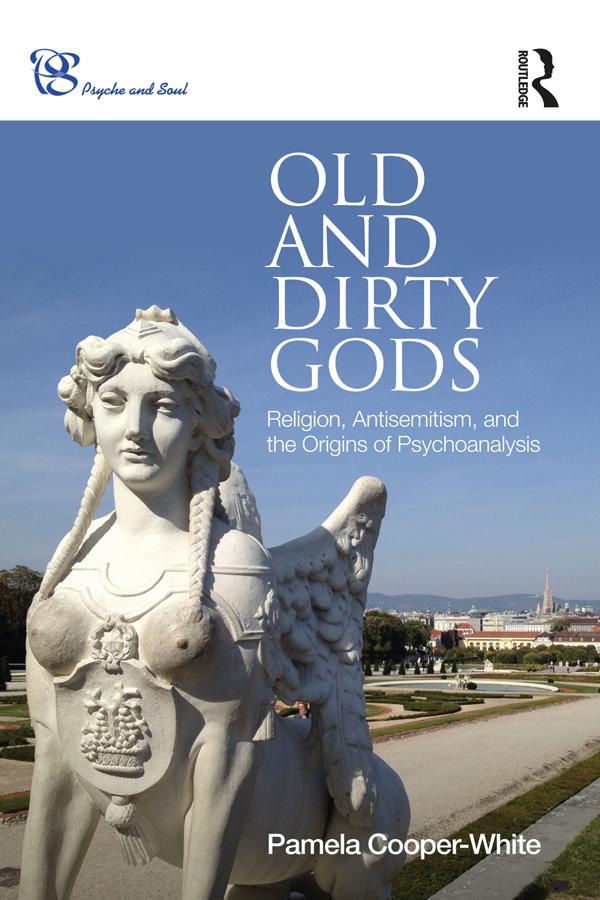
Freud’s collection of antiquities—his "old and dirty gods"—stood as silent witnesses to the early analysts’ paradoxical fascination and hostility toward religion. Pamela Cooper-White argues that antisemitism, reaching back centuries before the Holocaust, and the acute perspective from the margins that it engendered among the first analysts, stands at the very origins of psychoanalytic theory and practice.
The core insight of psychoanalytic thought— that there is always more beneath the surface appearances of reality, and that this "more" is among other things affective, memory-laden and psychological—cannot fail to have had something to do with the experiences of the first Jewish analysts in their position of marginality and oppression in Habsburg-Catholic Vienna of the 20th century. The book concludes with some parallels between the decades leading to the Holocaust and the current political situation in the U.S. and Europe, and their implications for psychoanalytic practice today.
Covering Pfister, Reik, Rank, and Spielrein as well as Freud, Cooper-White sets out how the first analysts’ position as Europe’s religious and racial "Other" shaped the development of psychoanalysis, and how these tensions continue to affect psychoanalysis today. Old and Dirty Gods will be of great interest to psychoanalysts as well as religious studies scholars.
Betal nemt med kort, Klarna, Apple Pay eller Google Pay. Ikke tilfreds? Du har altid 14 dages fortrydelsesret. Læs mere i vores vilkår. Har du spørgsmål, så send os en mail på hello@memmo.org.
Memmo gør det nemmere at studere – uanset hvor du er i verden. Hos os samler du dine kursusbøger og smarte studieværktøjer ét sted: resuméer, quizzer, podcasts og flashcards. Og så er der Ted, din studieven, der svarer på alt, du undrer dig over. Over 50 000 studerende studerer allerede her – bygget til at hjælpe dig med at lære hurtigere og stresse mindre.