
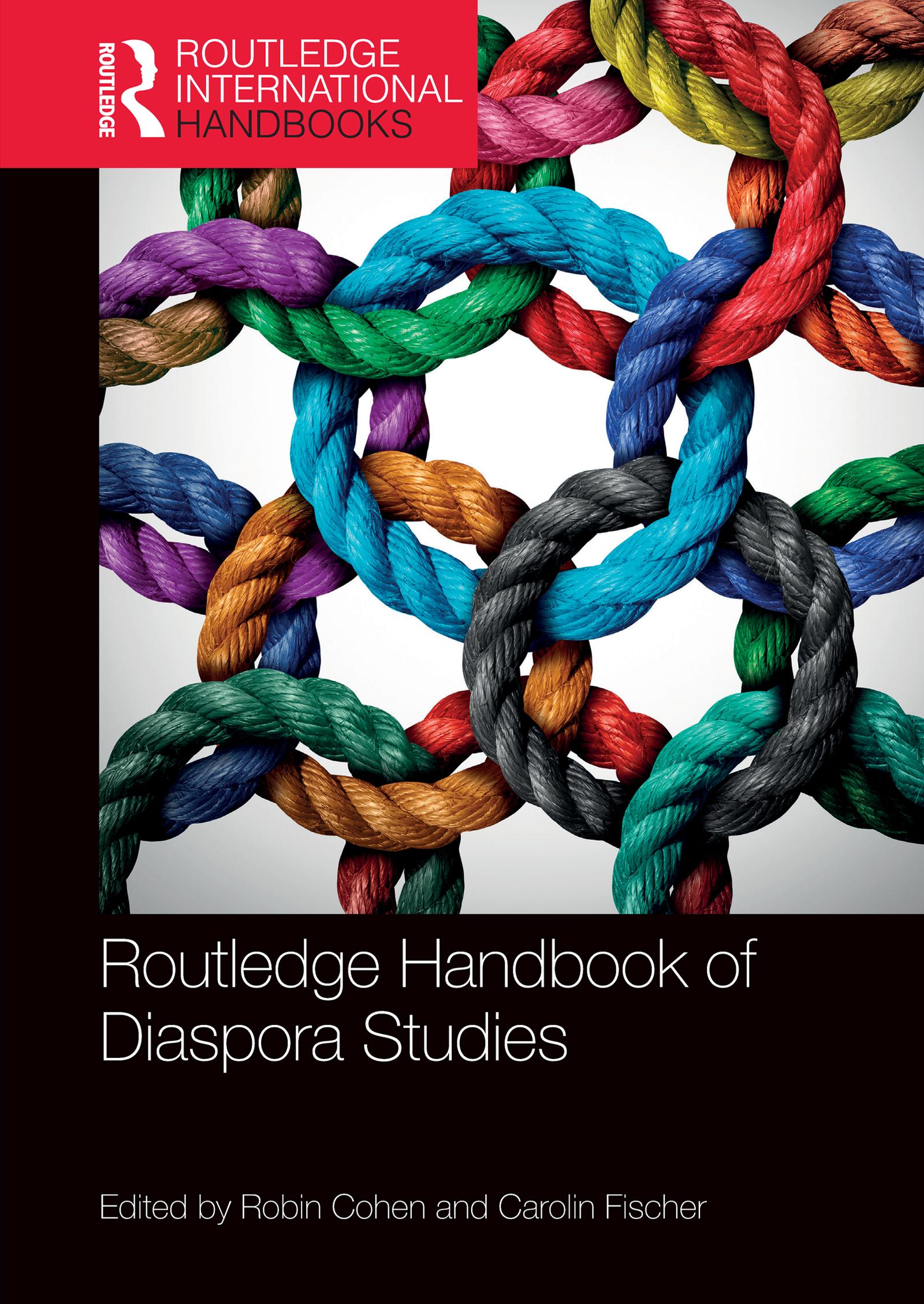
The word ‘diaspora’ has leapt from its previously confined use – mainly concerned with the dispersion of Jews, Greeks, Armenians and Africans away from their natal homelands – to cover the cases of many other ethnic groups, nationalities and religions. But this ‘horizontal’ scattering of the word to cover the mobility of many groups to many destinations, has been paralleled also by ‘vertical’ leaps, with the word diaspora being deployed to cover more and more phenomena and serve more and more objectives of different actors.
With sections on ‘debating the concept’, ‘complexity’, ‘home and home-making’, ‘connections’ and ‘critiques’, the Routledge Handbook of Diaspora Studies is likely to remain an authoritative reference for some time. Each contribution includes a targeted list of references for further reading. The editors have carefully blended established scholars of diaspora with younger scholars looking at how diasporas are constructed ‘from below’. The adoption of a variety of conceptual perspectives allows for generalization, contrasts and comparisons between cases.
In this exciting and authoritative collection over 40 scholars from many countries have explored the evolving use of the concept of diaspora, its possibilities as well as its limitations. This Handbook will be indispensable for students undertaking essays, debates and dissertations in the field.
Betal nemt med kort, Klarna, Apple Pay eller Google Pay. Ikke tilfreds? Du har altid 14 dages fortrydelsesret. Læs mere i vores vilkår. Har du spørgsmål, så send os en mail på hello@memmo.org.
Memmo gør det nemmere at studere – uanset hvor du er i verden. Hos os samler du dine kursusbøger og smarte studieværktøjer ét sted: resuméer, quizzer, podcasts og flashcards. Og så er der Ted, din studieven, der svarer på alt, du undrer dig over. Over 50 000 studerende studerer allerede her – bygget til at hjælpe dig med at lære hurtigere og stresse mindre.