
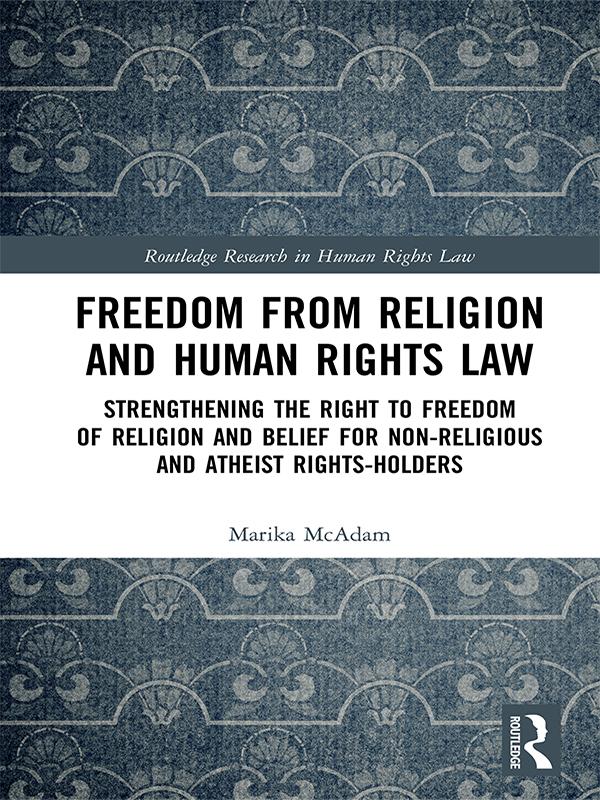
Although human rights belong to all persons on the basis of their humanity, this book demonstrates that in the practice of international human rights law, the freedom to be non-religious or atheist does not receive the same protection as the freedom to be religious. Despite the claimed universality of freedom of religion and belief contained in article 18 of the International Covenant on Civil and Political Rights, the key assertion made is that there is a hierarchy of religion and belief, with followers of major established religions enjoying high protection and low regulation at the top, and atheists and non-believers enduring high persecution and weaker protection at the bottom. The existence of this hierarchy is proven and critiqued through three case study chapters that respectively explore the extent to which non-religious and atheist rights-holders enjoy freedom from proselytism, freedom from hate and freedom from the religions of their parents.
Betal nemt med kort, Klarna, Apple Pay eller Google Pay. Ikke tilfreds? Du har altid 14 dages fortrydelsesret. Læs mere i vores vilkår. Har du spørgsmål, så send os en mail på hello@memmo.org.
Memmo gør det nemmere at studere – uanset hvor du er i verden. Hos os samler du dine kursusbøger og smarte studieværktøjer ét sted: resuméer, quizzer, podcasts og flashcards. Og så er der Ted, din studieven, der svarer på alt, du undrer dig over. Over 50 000 studerende studerer allerede her – bygget til at hjælpe dig med at lære hurtigere og stresse mindre.
Du kan måske også lide
Køb bogen0