
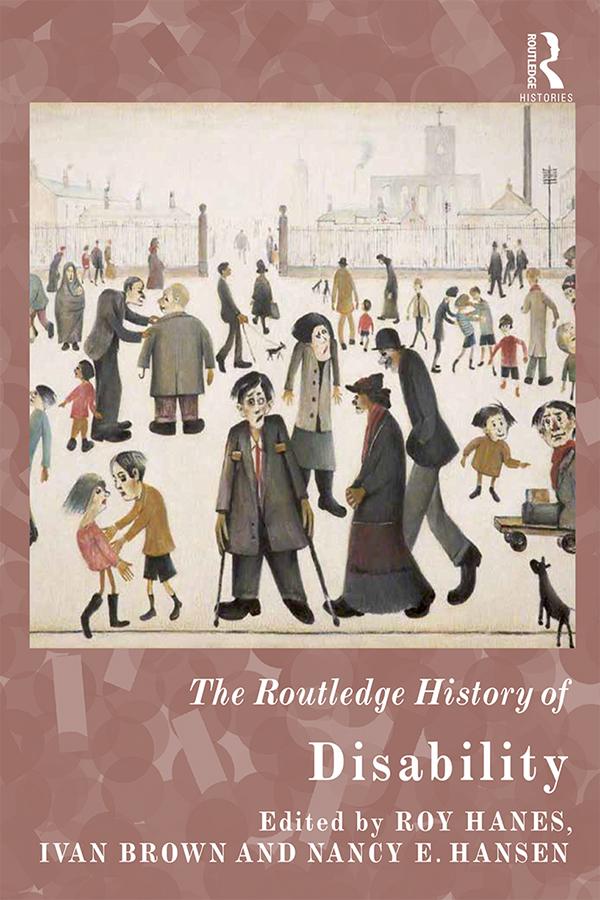
The Routledge History of Disability explores the shifting attitudes towards and representations of disabled people from the age of antiquity to the twenty-first century. Taking an international view of the subject, this wide-ranging collection shows that the history of disability cuts across racial, ethnic, religious, cultural, gender and class divides, highlighting the commonalities and differences between the experiences of disabled persons in global historical context.
The book is arranged in four parts, covering histories of disabilities across various time periods and cultures, histories of national disability policies, programs and services, histories of education and training and the ways in which disabled people have been seen and treated in the last few decades. Within this, the twenty-eight chapters discuss topics such as developments in disability issues during the late Ottoman period, the history of disability in Belgian Congo in the early twentieth century, blind asylums in nineteenth-century Scotland and the systematic killing of disabled children in Nazi Germany.
Illustrated with images and tables and providing an overview of how various countries, cultures and societies have addressed disability over time, this comprehensive volume offers a global perspective on this rapidly growing field and is a valuable resource for scholars of disability studies and histories of disabilities.
Betal nemt med kort, Klarna, Apple Pay eller Google Pay. Ikke tilfreds? Du har altid 14 dages fortrydelsesret. Læs mere i vores vilkår. Har du spørgsmål, så send os en mail på hello@memmo.org.
Memmo gør det nemmere at studere – uanset hvor du er i verden. Hos os samler du dine kursusbøger og smarte studieværktøjer ét sted: resuméer, quizzer, podcasts og flashcards. Og så er der Ted, din studieven, der svarer på alt, du undrer dig over. Over 50 000 studerende studerer allerede her – bygget til at hjælpe dig med at lære hurtigere og stresse mindre.