
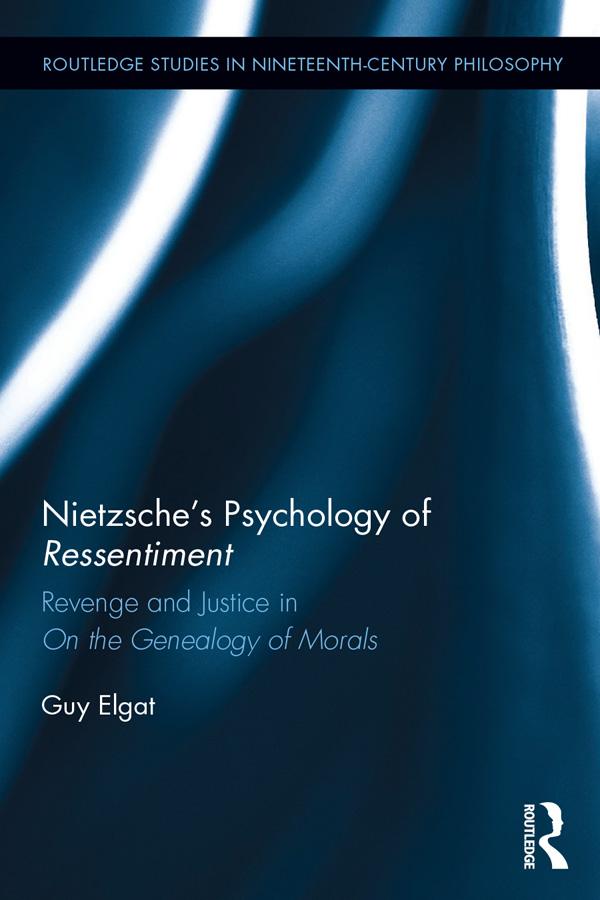
Ressentiment—the hateful desire for revenge—plays a pivotal role in Nietzsche’s On the Genealogy of Morals. Ressentiment explains the formation of bad conscience, guilt, asceticism, and, most importantly, it motivates the "slave revolt" that gives rise to Western morality’s values. Ressentiment, however, has not enjoyed a thorough treatment in the secondary literature. This book brings it sharply into focus and provides the first detailed examination of Nietzsche’s psychology of ressentiment. Unlike other books on the Genealogy, it uses ressentiment as a key to the Genealogy and focuses on the intriguing relationship between ressentiment and justice. It shows how ressentiment, despite its blindness to justice, gives rise to moral justice—the central target of Nietzsche’s critique. This critique notwithstanding, the Genealogy shows Nietzsche’s enduring commitment to the virtue of non-moral justice: a commitment that grounds his provocative view that moral justice spells the ‘end of justice’. The result provides a novel view of Nietzsche's moral psychology in the Genealogy, his critique of morality, and his views on justice.
Betal nemt med kort, Klarna, Apple Pay eller Google Pay. Ikke tilfreds? Du har altid 14 dages fortrydelsesret. Læs mere i vores vilkår. Har du spørgsmål, så send os en mail på hello@memmo.org.
Memmo gør det nemmere at studere – uanset hvor du er i verden. Hos os samler du dine kursusbøger og smarte studieværktøjer ét sted: resuméer, quizzer, podcasts og flashcards. Og så er der Ted, din studieven, der svarer på alt, du undrer dig over. Over 50 000 studerende studerer allerede her – bygget til at hjælpe dig med at lære hurtigere og stresse mindre.