
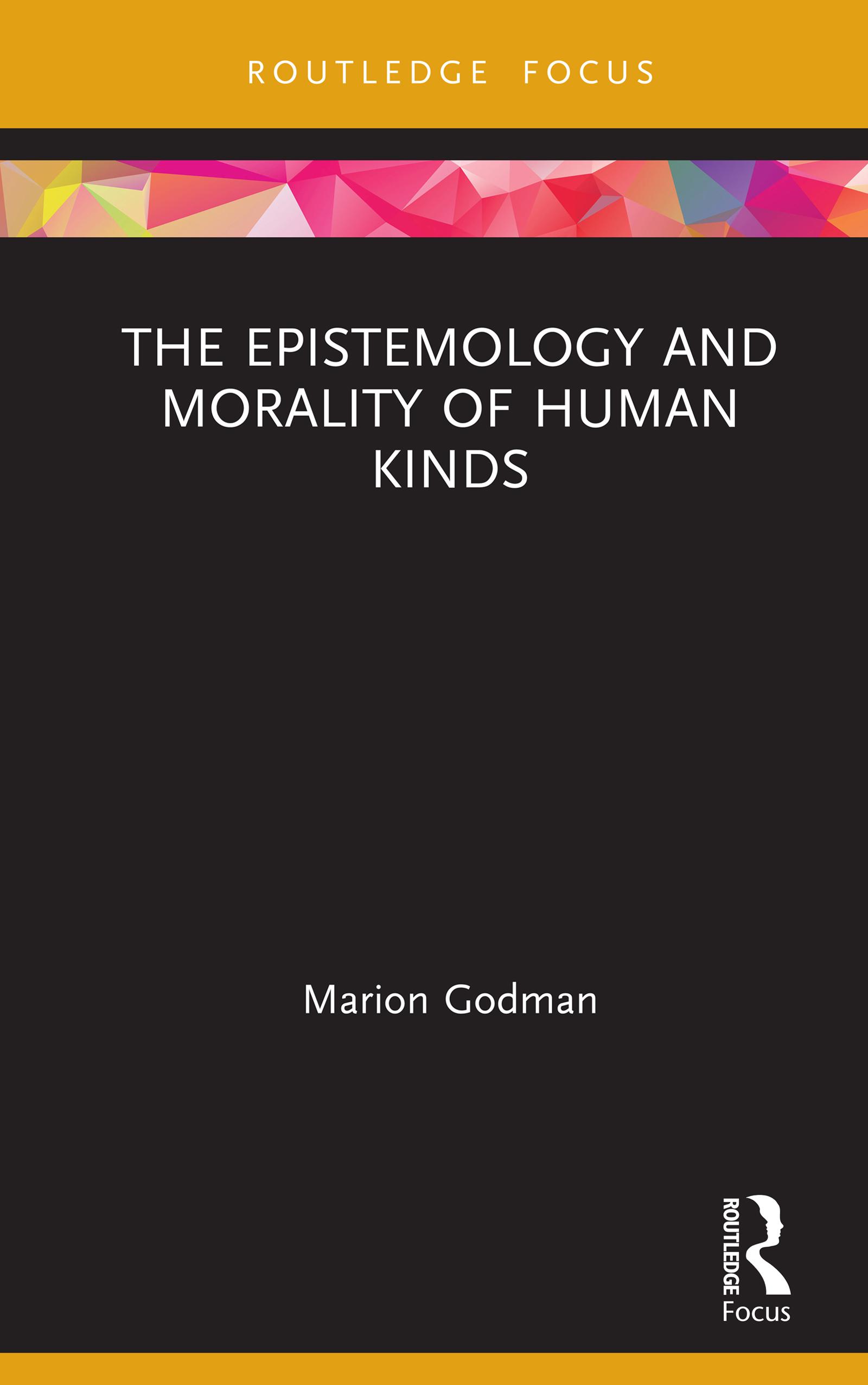
Natural kinds is a widely used and pivotal concept in philosophy – the idea being that the classifications and taxonomies employed by science correspond to the real kinds in nature. Natural kinds are often opposed to the idea of kinds in the human and social sciences, which are typically seen as social constructions, characterised by changing norms and resisting scientific reduction. Yet human beings are also a subject of scientific study.Does this mean humans fall into corresponding kinds of their own?
In The Epistemology and Morality of Human Kinds Marion Godman defends the idea of human kinds. She first examines the scientific use and nature of human kinds, considering the arguments of key philosophers whose work bears upon human kinds, such as Ian Hacking, John Searle, Richard Boyd and Ruth Millikan. Using the examples of gender, ethnic minorities and Buddhism she then argues that human kinds are a result of ongoing historical reproduction, chiefly due to pre-existing cultural models and social learning. Her novel argument shifts the focus away from the reductionism characteristic of research about human kinds. Instead, sheargues that they are “multiply projectable” and deserving of scientific study not in spite of, but because of their role in explaining our identity, injusticeand the emergence of group rights.
Betal nemt med kort, Klarna, Apple Pay eller Google Pay. Ikke tilfreds? Du har altid 14 dages fortrydelsesret. Læs mere i vores vilkår. Har du spørgsmål, så send os en mail på hello@memmo.org.
Memmo gør det nemmere at studere – uanset hvor du er i verden. Hos os samler du dine kursusbøger og smarte studieværktøjer ét sted: resuméer, quizzer, podcasts og flashcards. Og så er der Ted, din studieven, der svarer på alt, du undrer dig over. Over 50 000 studerende studerer allerede her – bygget til at hjælpe dig med at lære hurtigere og stresse mindre.