
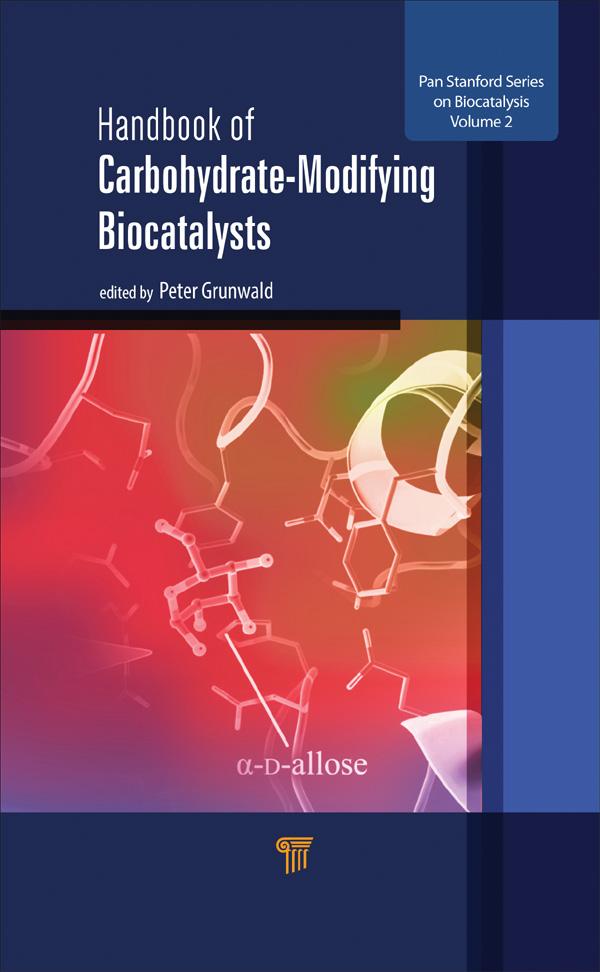
This book provides an actual overview of the structure, function, and application of carbohydrate-modifying biocatalysts. Carbohydrates have been disregarded for a long time by the scientific community, mainly due to their complex structure. Meanwhile, the situation changed with increasing knowledge about the key role carbohydrates play in biological processes such as recognition, signal transduction, immune responses, and others. An outcome of research activities in glycoscience is the development of several new pharmaceuticals against serious diseases such as malaria, cancer, and various storage diseases. Furthermore, the employment of carbohydrate-modifying biocatalysts—enzymes as well as microorganisms—will contribute significantly to the development of environmentally friendly processes boosting a shift of the chemical industry from petroleum- to bio-based production of chemicals from renewable resources.
The updated content of the second edition of this book has been extended by discussing the current state of the art of using recombinantly expressed carbohydrate-modifying biocatalysts and the synthesis of minicellulosomes in connection with consolidated bioprocessing of lignocellulosic material. Furthermore, a synthetic biology approach for using DAHP-dependent aldolases to catalyze asymmetric aldol reactions is presented.
Betal nemt med kort, Klarna, Apple Pay eller Google Pay. Ikke tilfreds? Du har altid 14 dages fortrydelsesret. Læs mere i vores vilkår. Har du spørgsmål, så send os en mail på hello@memmo.org.
Memmo gør det nemmere at studere – uanset hvor du er i verden. Hos os samler du dine kursusbøger og smarte studieværktøjer ét sted: resuméer, quizzer, podcasts og flashcards. Og så er der Ted, din studieven, der svarer på alt, du undrer dig over. Over 50 000 studerende studerer allerede her – bygget til at hjælpe dig med at lære hurtigere og stresse mindre.