
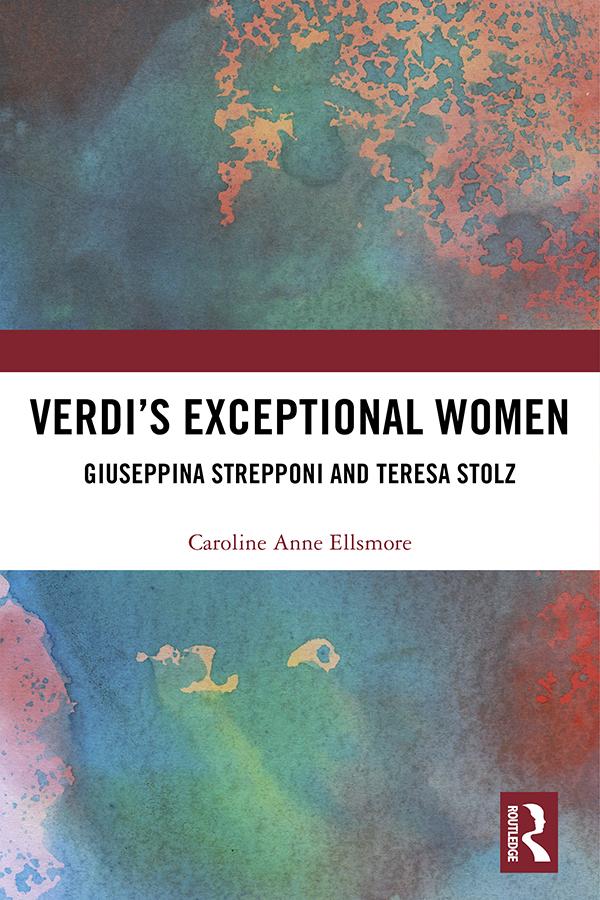
This investigation offers new perspectives on Giuseppe Verdi’s attitudes to women and the functions which they fulfilled for him. The book explores Verdi’s professional and personal relationship with women who were exceptional within the traditional socio-sexual structure of patria potestà, in the context of women’s changing status in nineteenth-century Italian society. It focusses on two women; the singers Giuseppina Strepponi, who supported and enhanced Verdi’s creativity at the beginning of his professional life and Teresa Stolz, who sustained his sense of self-worth at its end. Each was an essential emotional benefactor without whom Verdi’s career would not have been the same. The subject of the Strepponi-Verdi marriage and the impact of Strepponi’s past deserve further detailed and nuanced discussion. This book demonstrates Verdi’s shifting power-balance with Strepponi as she sought to retain intellectual self-respect while his success and control increased. The negative stereotypes concerning operatic ‘divas’ do not withstand scrutiny when applied either to Strepponi or to Stolz. This book presents a revisionist appraisal of Stolz through close examination of her letters. Revealing Stolz’s value to Verdi, they also provide contemporary operatic criticism and behind-the-scenes comment, some excerpts of which are published here in English for the first time.
Betal nemt med kort, Klarna, Apple Pay eller Google Pay. Ikke tilfreds? Du har altid 14 dages fortrydelsesret. Læs mere i vores vilkår. Har du spørgsmål, så send os en mail på hello@memmo.org.
Memmo gør det nemmere at studere – uanset hvor du er i verden. Hos os samler du dine kursusbøger og smarte studieværktøjer ét sted: resuméer, quizzer, podcasts og flashcards. Og så er der Ted, din studieven, der svarer på alt, du undrer dig over. Over 50 000 studerende studerer allerede her – bygget til at hjælpe dig med at lære hurtigere og stresse mindre.