
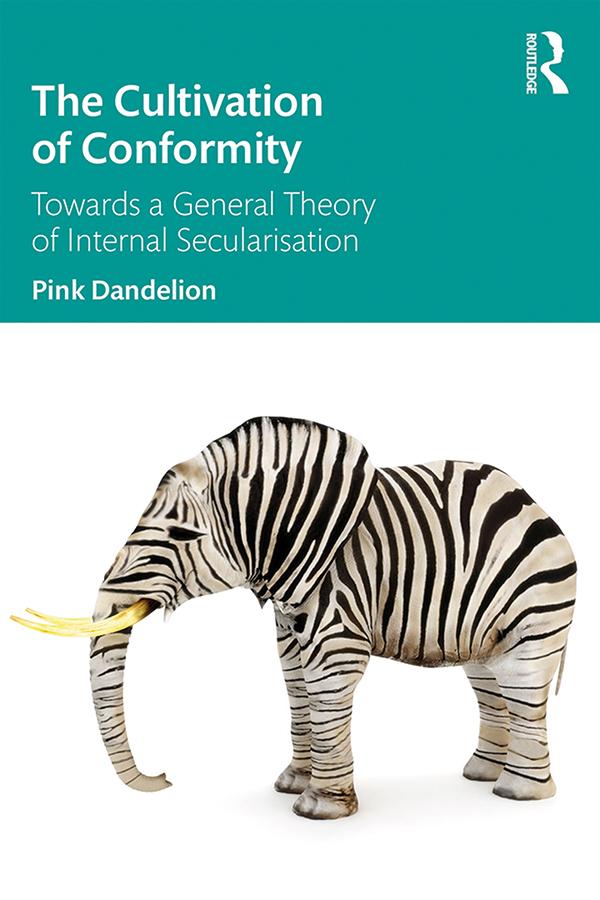
This book explores the inter-relationship between religious groups and wider society and examines the way religious groups change in relation to societal norms, potentially to the point of undergoing processes of ‘internal secularisation’ within secular and secularist cultures. Received sociological wisdom suggests that over time religious groups moderate their claims. This comes with the potential loss of new adherents, for theorists of secularisation suggest unique or universal, rather than moderate, truth claims appear attractive to would-be recruits. At the same time, religious groups need to appear equivalent, in terms of harmlessness, to state-sanctioned religious expression in order to secure rights. Thus, religious organisations face a perpetual conundrum. Using British Quakers as a case study as they moved from a counter-cultural group to an accepted and accepting part of twentieth- and twenty-first-century society, the author builds on models of religion and non-religion in terms of flows and explores the consequences of religious assimilation when the process of constructing both distinctive appeal and ‘harmlessness’ in pursuit of rights is played out in a secular culture. A major contribution to the sociology of religion, The Cultivation of Conformity presents a new theory of internal secularisation as the ultimate stage of the cultivation of conformity, and a model of the way sects and society inter-relate.
Betal nemt med kort, Klarna, Apple Pay eller Google Pay. Ikke tilfreds? Du har altid 14 dages fortrydelsesret. Læs mere i vores vilkår. Har du spørgsmål, så send os en mail på hello@memmo.org.
Memmo gør det nemmere at studere – uanset hvor du er i verden. Hos os samler du dine kursusbøger og smarte studieværktøjer ét sted: resuméer, quizzer, podcasts og flashcards. Og så er der Ted, din studieven, der svarer på alt, du undrer dig over. Over 50 000 studerende studerer allerede her – bygget til at hjælpe dig med at lære hurtigere og stresse mindre.