
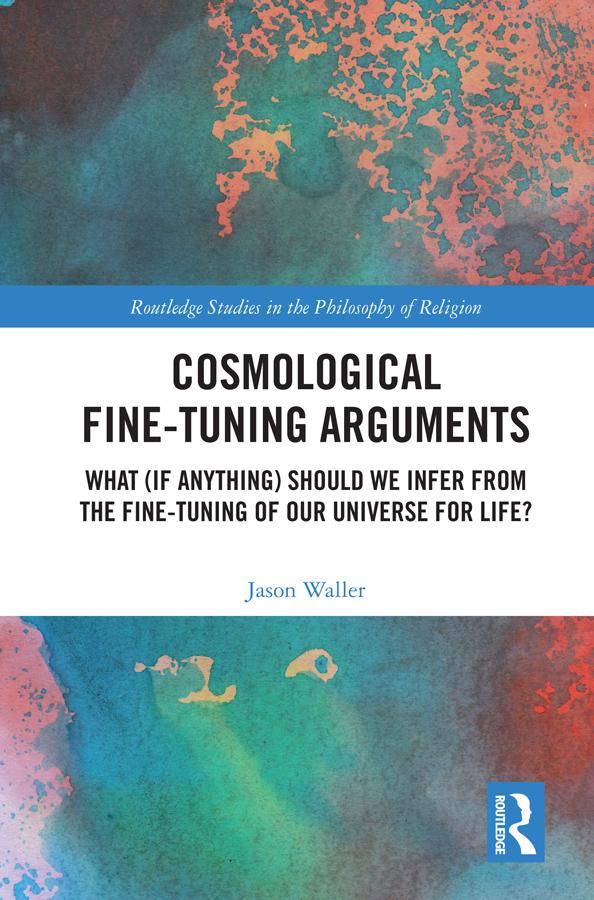
If the physical constants, initial conditions, or laws of nature in our universe had been even slightly different, then the evolution of life would have been impossible. This observation has led many philosophers and scientists to ask the natural next question: why is our universe so "fine-tuned" for life? The debates around this question are wide-ranging, multi-disciplinary, complicated, technical, and (at times) heated. This study is a comprehensive investigation of these debates and the many metaphysical and epistemological questions raised by cosmological fine-tuning. Waller’s study reaches two significant and controversial conclusions. First, he concludes that the criticisms directed at the "multiverse hypothesis" by theists and at the "theistic hypothesis" by naturalists are largely unsuccessful. Neither of these options can plausibly be excluded. Choosing between them seems to turn on primitive (and so hard to justify) metaphysical intuitions. Second, in order to break the philosophical deadlock, Waller moves the debate from the level of universes to the level of possible worlds. Arguing that possible worlds are also "fine-tuned" in an important and interesting sense, Waller concludes that the only plausible explanation for the fine-tuning of the actual world is to posit the existence of some kind of "God-like-thing."
Betal nemt med kort, Klarna, Apple Pay eller Google Pay. Ikke tilfreds? Du har altid 14 dages fortrydelsesret. Læs mere i vores vilkår. Har du spørgsmål, så send os en mail på hello@memmo.org.
Memmo gør det nemmere at studere – uanset hvor du er i verden. Hos os samler du dine kursusbøger og smarte studieværktøjer ét sted: resuméer, quizzer, podcasts og flashcards. Og så er der Ted, din studieven, der svarer på alt, du undrer dig over. Over 50 000 studerende studerer allerede her – bygget til at hjælpe dig med at lære hurtigere og stresse mindre.