
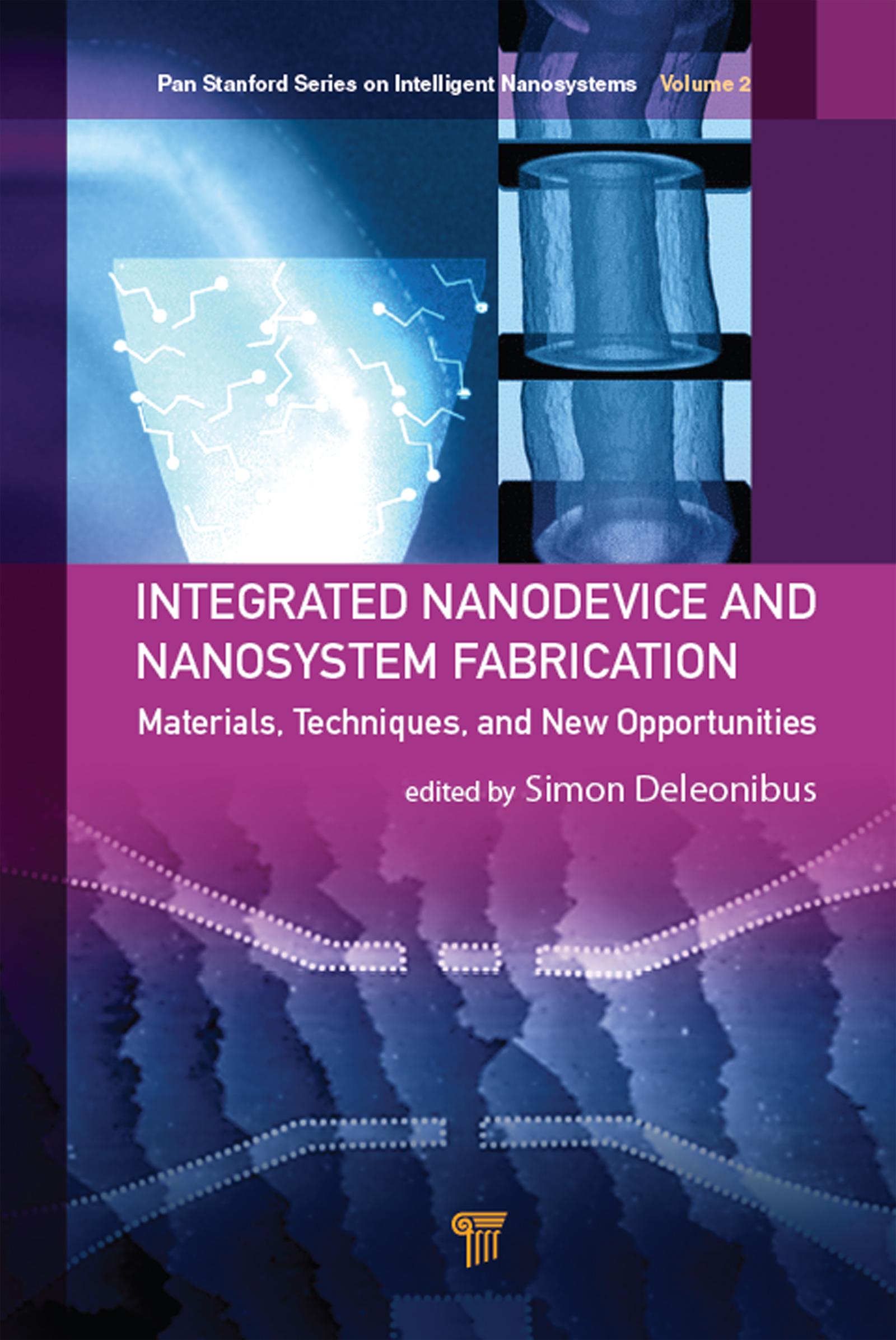
Since its invention, the integrated circuit has necessitated new process modules and numerous architectural changes to improve application performances, power consumption, and cost reduction. Silicon CMOS is now well established to offer the integration of several tens of billions of devices on a chip or in a system. At present, there are important challenges in the introduction of heterogeneous co-integration of materials and devices with the silicon CMOS 2D- and 3D-based platforms. New fabrication techniques allowing strong energy and variability efficiency come in as possible players to improve the various figures of merit of fabrication technology.
Integrated Nanodevice and Nanosystem Fabrication: Breakthroughs and Alternatives is the second volume in the Pan Stanford Series on Intelligent Nanosystems. The book contains 8 chapters and is divided into two parts, the first of which reports breakthrough materials and techniques such as single ion implantation in silicon and diamond, graphene and 2D materials, nanofabrication using scanning probe microscopes, while the second tackles the scaling and architectural aspects of silicon devices through HiK scaling for nanoCMOS, nanoscale epitaxial growth of group IV semiconductors, design for variability co-optimization in SOI FinFETs, and nanowires for CMOS and diversifications.
Betal nemt med kort, Klarna, Apple Pay eller Google Pay. Ikke tilfreds? Du har altid 14 dages fortrydelsesret. Læs mere i vores vilkår. Har du spørgsmål, så send os en mail på hello@memmo.org.
Memmo gør det nemmere at studere – uanset hvor du er i verden. Hos os samler du dine kursusbøger og smarte studieværktøjer ét sted: resuméer, quizzer, podcasts og flashcards. Og så er der Ted, din studieven, der svarer på alt, du undrer dig over. Over 50 000 studerende studerer allerede her – bygget til at hjælpe dig med at lære hurtigere og stresse mindre.