
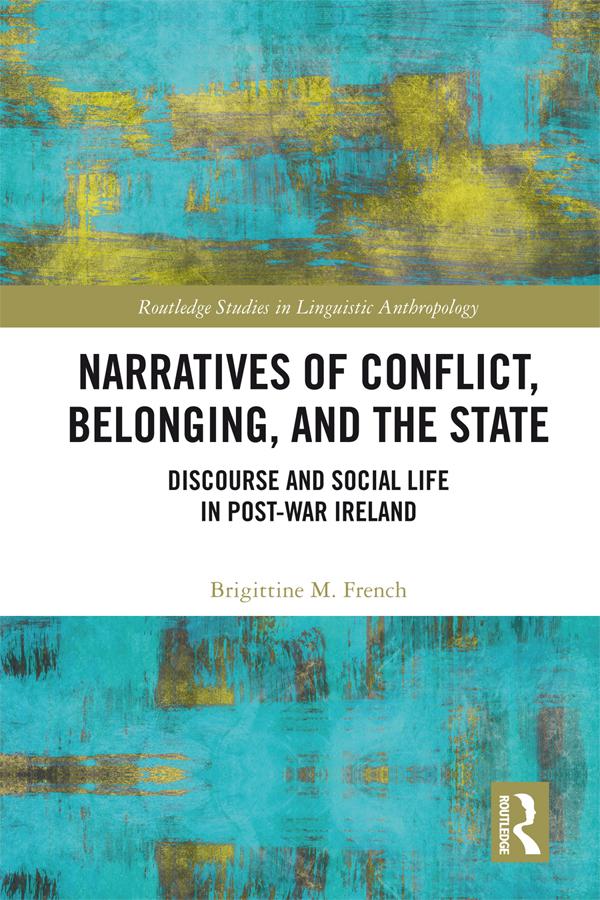
Using key perspectives from Linguistic anthropology the book illuminates how social actors take up the ideals of law, equality, and democratic representation in locally-meaningful ways to make their own national history in ways that may perpetuate violence and inequality. Focusing specifically on post-war conditions in Ireland, the author contextualizes commonplace practices by which citizens are made to learn the gap between official membership in and political belonging to a democratic state. Each chapter takes up a different aspect of state authority and power to constitute citizenship, to enact laws, to mediate conflict, and to create histories in the context of social inequalities and political hostilities. This book is an excellent ethnographic addition to courses in linguistic anthropology, giving readers the opportunity to explore applications and ramifications of key theoretical text within research.
Betal nemt med kort, Klarna, Apple Pay eller Google Pay. Ikke tilfreds? Du har altid 14 dages fortrydelsesret. Læs mere i vores vilkår. Har du spørgsmål, så send os en mail på hello@memmo.org.
Memmo gør det nemmere at studere – uanset hvor du er i verden. Hos os samler du dine kursusbøger og smarte studieværktøjer ét sted: resuméer, quizzer, podcasts og flashcards. Og så er der Ted, din studieven, der svarer på alt, du undrer dig over. Over 50 000 studerende studerer allerede her – bygget til at hjælpe dig med at lære hurtigere og stresse mindre.