
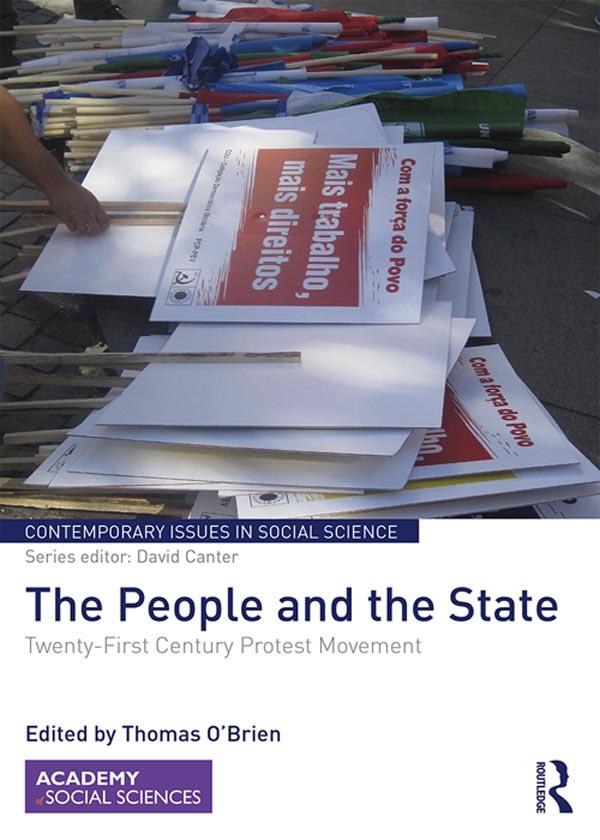
Protest has proliferated in the early part of the twenty-first century, forcing change in political systems and challenging established patterns of behaviour. The factors driving these protests range from religion and inequality through to the effectiveness of the state and its role in protecting the rights of citizens. The growth in discontent represented by these protests potentially threatens the stability of the state by raising questions about the right of governments to govern. Anger and frustration embodied in many of these actions has resulted in the growth of support for populist political actors promising simplified solutions to the complex underlying issues. In this way, the inability of the state to address the claims of its population potentially places its continued viability at risk. The cases in this collection examine a range of protest movements from around the world, in both democratic and authoritarian political systems, to provide an overview of contemporary issues and protest forms. Addressing contemporary protest in this manner is an important task in supporting our understanding of the root causes of the current tensions and their possible future effects. This book is a compilation of articles from a special issue of Contemporary Social Science with additional papers selected from Contemporary Politics, Journal of Contemporary China and Democratization.
Betal nemt med kort, Klarna, Apple Pay eller Google Pay. Ikke tilfreds? Du har altid 14 dages fortrydelsesret. Læs mere i vores vilkår. Har du spørgsmål, så send os en mail på hello@memmo.org.
Memmo gør det nemmere at studere – uanset hvor du er i verden. Hos os samler du dine kursusbøger og smarte studieværktøjer ét sted: resuméer, quizzer, podcasts og flashcards. Og så er der Ted, din studieven, der svarer på alt, du undrer dig over. Over 50 000 studerende studerer allerede her – bygget til at hjælpe dig med at lære hurtigere og stresse mindre.