
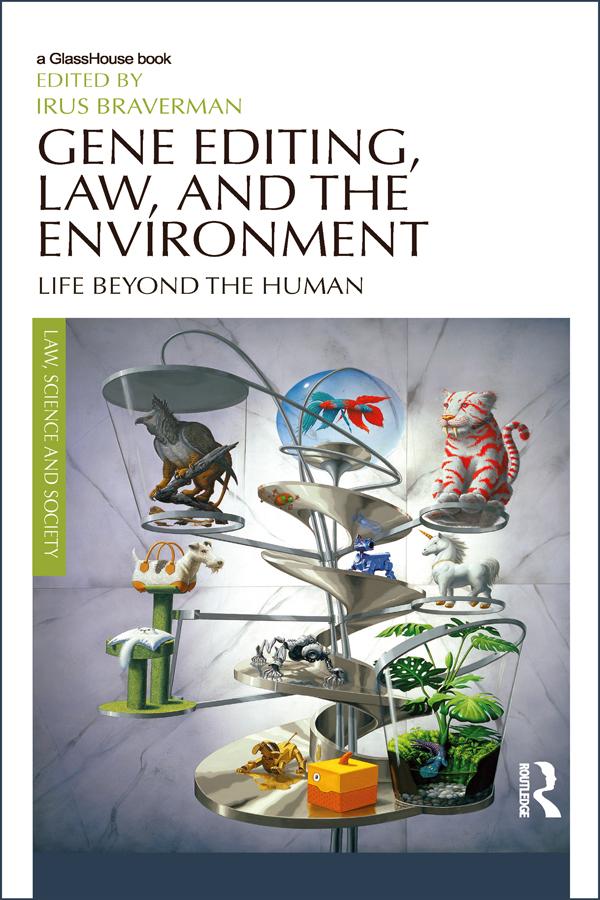
Technologies like CRISPR and gene drives are ushering in a new era of genetic engineering, wherein the technical means to modify DNA are cheaper, faster, more accurate, more widely accessible, and with more far-reaching effects than ever before. These cutting-edge technologies raise legal, ethical, cultural, and ecological questions that are so broad and consequential for both human and other-than-human life that they can be difficult to grasp. What is clear, however, is that the power to directly alter not just a singular form of life but also the genetics of entire species and thus the composition of ecosystems is currently both inadequately regulated and undertheorized. In Gene Editing, Law, and the Environment, distinguished scholars from law, the life sciences, philosophy, environmental studies, science and technology studies, animal health, and religious studies examine what is at stake with these new biotechnologies for life and law, both human and beyond.
Betal nemt med kort, Klarna, Apple Pay eller Google Pay. Ikke tilfreds? Du har altid 14 dages fortrydelsesret. Læs mere i vores vilkår. Har du spørgsmål, så send os en mail på hello@memmo.org.
Memmo gør det nemmere at studere – uanset hvor du er i verden. Hos os samler du dine kursusbøger og smarte studieværktøjer ét sted: resuméer, quizzer, podcasts og flashcards. Og så er der Ted, din studieven, der svarer på alt, du undrer dig over. Over 50 000 studerende studerer allerede her – bygget til at hjælpe dig med at lære hurtigere og stresse mindre.