
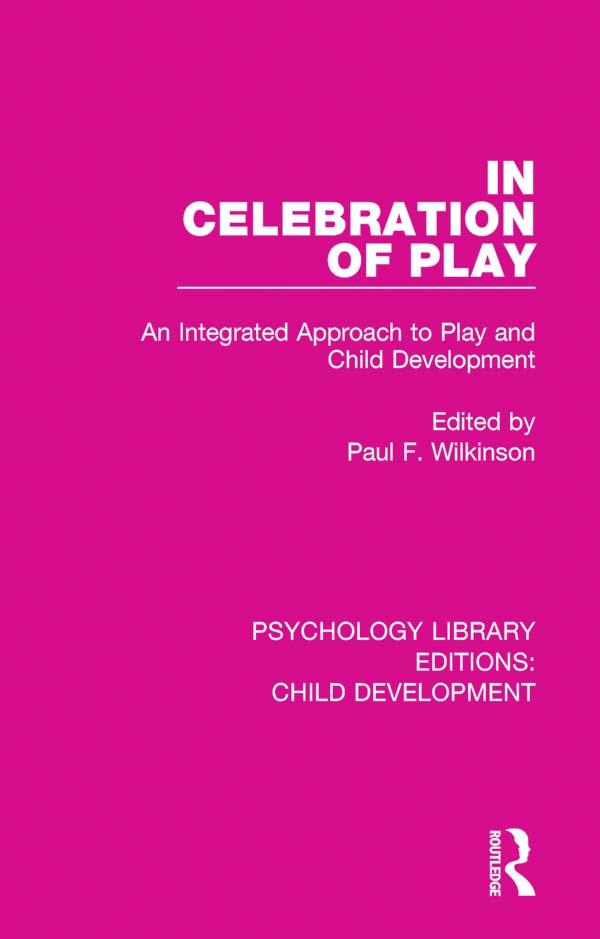
Play is the child’s way of learning about, adapting to and integrating with his or her environment. In addition to adequate sports and recreation facilities children need a wide variety of opportunities, choices and raw materials that they can use as they see fit for free constructive creative play. Originally published in 1980, these essays, drawn from papers given at the International Playgrounds Association’s Seventh World Congress, focus on the social significance of play. However, both the Association and the book itself are not solely concerned with ‘playgrounds’ in the formal sense; rather, they are concerned with the wide range of play environments that are – or should be – available to children. It is recognised that play opportunities can exist for the child in and around the home (playrooms, backyards), the school and public park (traditional, adventure and creative playgrounds), the institution (day-care centres, hospitals), and the city qua city (the streets and shopping centres). This work is concerned with all these environments, considering the developmental aspects of play in a social context.
The varied contributions from researchers and play leaders from several countries, consider such topics as the importance of play, development through play, leadership training and special groups.
Betal nemt med kort, Klarna, Apple Pay eller Google Pay. Ikke tilfreds? Du har altid 14 dages fortrydelsesret. Læs mere i vores vilkår. Har du spørgsmål, så send os en mail på hello@memmo.org.
Memmo gør det nemmere at studere – uanset hvor du er i verden. Hos os samler du dine kursusbøger og smarte studieværktøjer ét sted: resuméer, quizzer, podcasts og flashcards. Og så er der Ted, din studieven, der svarer på alt, du undrer dig over. Over 50 000 studerende studerer allerede her – bygget til at hjælpe dig med at lære hurtigere og stresse mindre.