
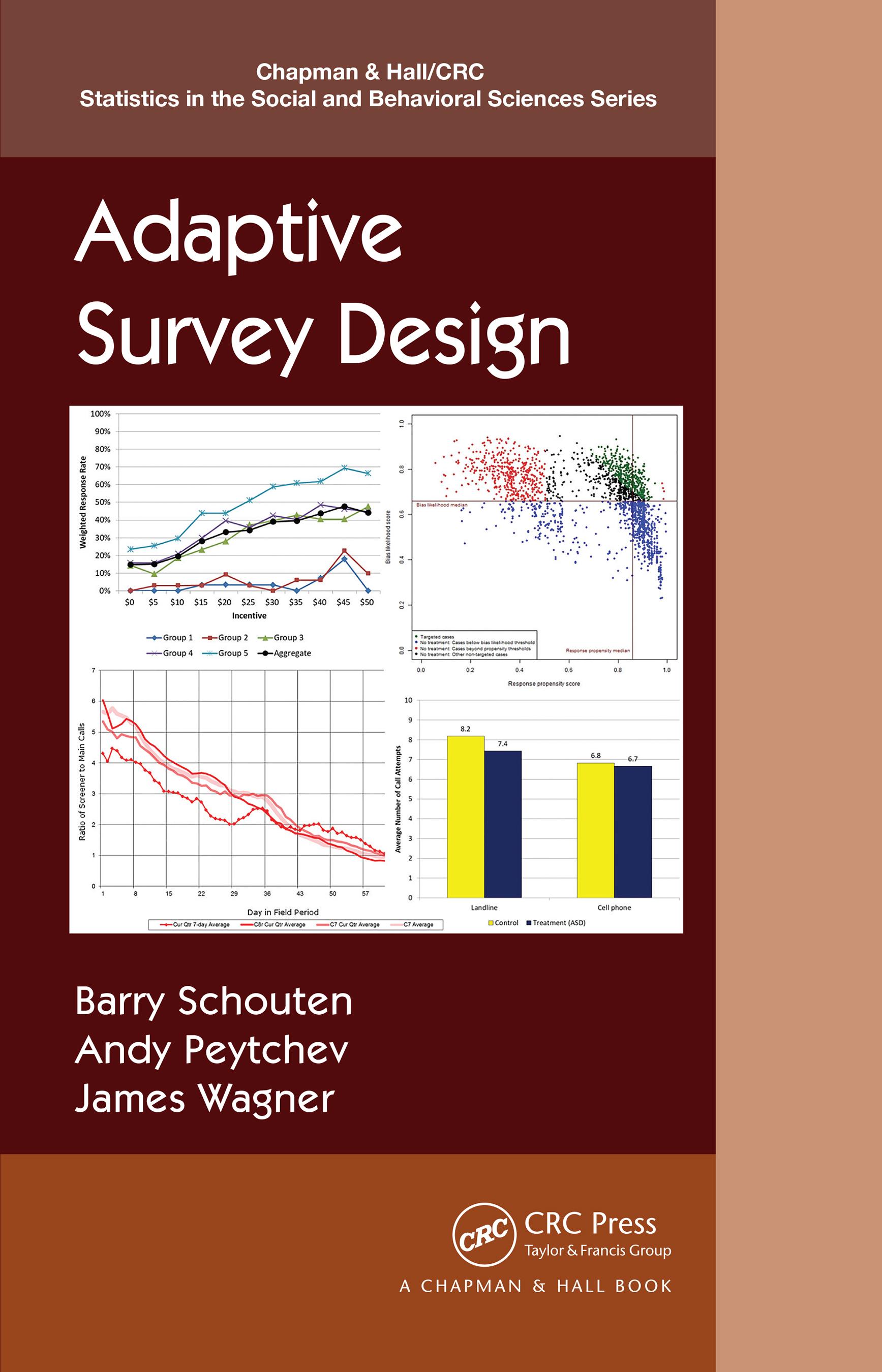
Adaptive survey designs (ASDs) provide a framework for data-driven tailoring of data collection procedures to different sample members, often for cost and bias reduction. People vary in how likely they are to respond and in how they respond. This variation leads to opportunities to selectively deploy design features in order to control both nonresponse and measurement errors. ASD aims at the optimal matching of design features and the characteristics of respondents given the survey budget. Such a goal is sensible, but ASD requires investment in more advanced technical systems and management infrastructure and asks for the collection of relevant auxiliary data. So what are current best practices in ASD? And is ASD worthwhile when the same auxiliary data are employed in the estimation afterwards? In this book, the authors provide answers to these questions, and much more.
Betal nemt med kort, Klarna, Apple Pay eller Google Pay. Ikke tilfreds? Du har altid 14 dages fortrydelsesret. Læs mere i vores vilkår. Har du spørgsmål, så send os en mail på hello@memmo.org.
Memmo gør det nemmere at studere – uanset hvor du er i verden. Hos os samler du dine kursusbøger og smarte studieværktøjer ét sted: resuméer, quizzer, podcasts og flashcards. Og så er der Ted, din studieven, der svarer på alt, du undrer dig over. Over 50 000 studerende studerer allerede her – bygget til at hjælpe dig med at lære hurtigere og stresse mindre.