
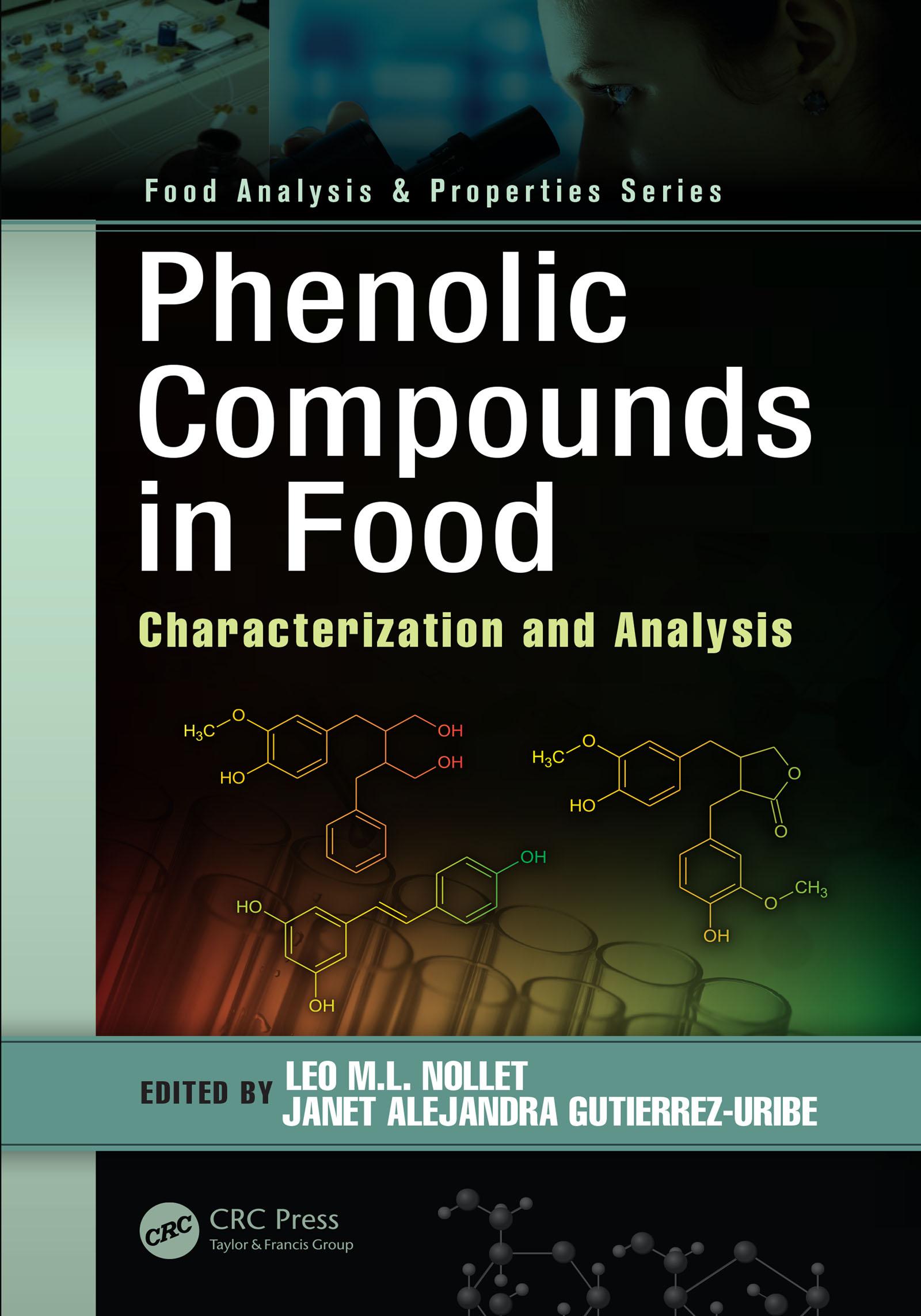
Phenolic compounds, one of the most widely distributed groups of secondary metabolites in plants, have received a lot of attention in the last few years since the consumption of vegetables and beverages with a high level of such compounds may reduce risks of the development of several diseases. This is partially due to their antioxidant power since other interactions with cell functions have been discovered. What’s more, phenolic compounds are involved in many functions in plants, such as sensorial properties, structure, pollination, resistance to pests and predators, germination, processes of seed, development, and reproduction.
Phenolic compounds can be classified in different ways, ranging from simple molecules to highly polymerized compounds. Phenolic Compounds in Food: Characterization and Analysis deals with all aspects of phenolic compounds in food.
In five sections, the 21 chapters of this book address the classification and occurrence of phenolic compounds in nature and foodstuffs; discuss all major aspects of analysis of phenolic compounds in foods, such as extraction, clean-up, separation, and detection; detail specific analysis methods of a number of classes of phenolic compounds, from simple molecules to complex compounds; describe the antioxidant power of phenolic compounds; and discuss specific analysis methods in different foodstuffs.
Betal nemt med kort, Klarna, Apple Pay eller Google Pay. Ikke tilfreds? Du har altid 14 dages fortrydelsesret. Læs mere i vores vilkår. Har du spørgsmål, så send os en mail på hello@memmo.org.
Memmo gør det nemmere at studere – uanset hvor du er i verden. Hos os samler du dine kursusbøger og smarte studieværktøjer ét sted: resuméer, quizzer, podcasts og flashcards. Og så er der Ted, din studieven, der svarer på alt, du undrer dig over. Over 50 000 studerende studerer allerede her – bygget til at hjælpe dig med at lære hurtigere og stresse mindre.