
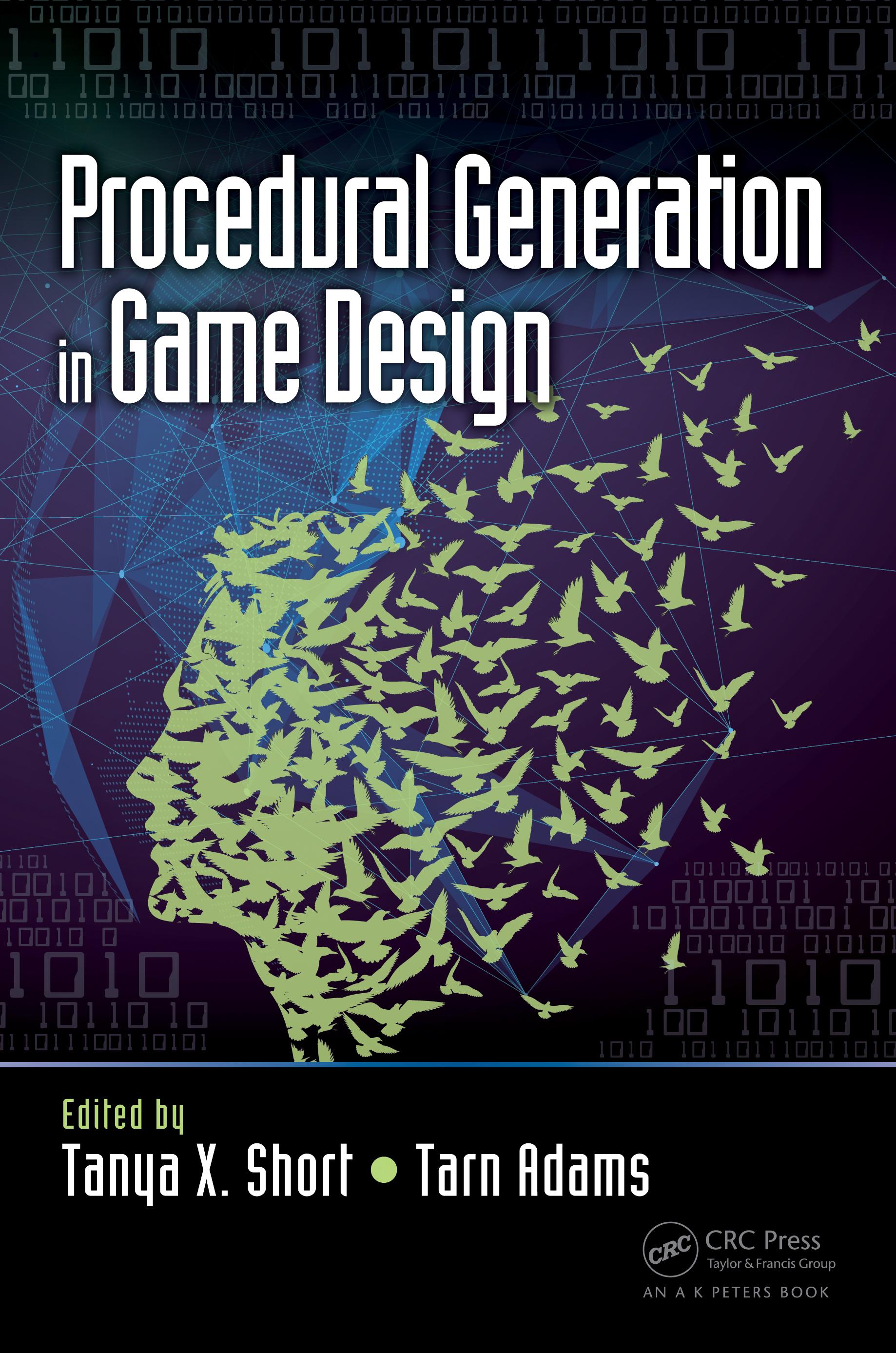
Making a game can be an intensive process, and if not planned accurately can easily run over budget. The use of procedural generation in game design can help with the intricate and multifarious aspects of game development; thus facilitating cost reduction. This form of development enables games to create their play areas, objects and stories based on a set of rules, rather than relying on the developer to handcraft each element individually. Readers will learn to create randomized maps, weave accidental plotlines, and manage complex systems that are prone to unpredictable behavior. Tanya Short’s and Tarn Adams’ Procedural Generation in Game Design offers a wide collection of chapters from various experts that cover the implementation and enactment of procedural generation in games. Designers from a variety of studios provide concrete examples from their games to illustrate the many facets of this emerging sub-discipline.
Key Features:
- Introduces the differences between static/traditional game design and procedural game design
- Demonstrates how to solve or avoid common problems with procedural game design in a variety of concrete ways
- Includes industry leaders’ experiences and lessons from award-winning games
- World’s finest guide for how to begin thinking about procedural design
Betal nemt med kort, Klarna, Apple Pay eller Google Pay. Ikke tilfreds? Du har altid 14 dages fortrydelsesret. Læs mere i vores vilkår. Har du spørgsmål, så send os en mail på hello@memmo.org.
Memmo gør det nemmere at studere – uanset hvor du er i verden. Hos os samler du dine kursusbøger og smarte studieværktøjer ét sted: resuméer, quizzer, podcasts og flashcards. Og så er der Ted, din studieven, der svarer på alt, du undrer dig over. Over 50 000 studerende studerer allerede her – bygget til at hjælpe dig med at lære hurtigere og stresse mindre.