
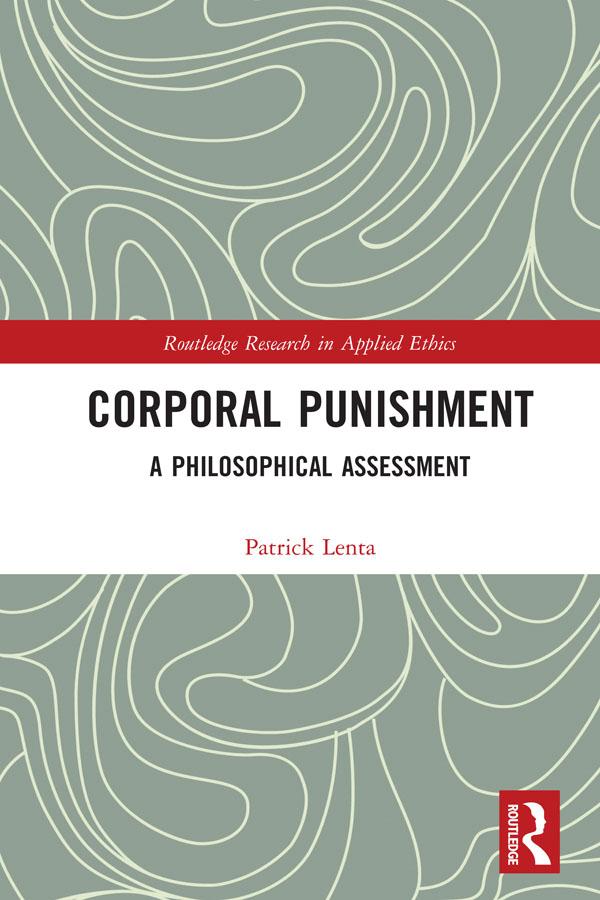
The aim of this book is to assess the moral permissibility of corporal punishment and to enquire into whether or not it ought to be legally prohibited. Against the widespread view that corporal punishment is morally legitimate and should be legally permitted provided it falls short of abuse, Patrick Lenta argues that all corporal punishment, even parental spanking, is morally impermissible and ought to be legally proscribed. The advantages claimed for corporal punishment over alternative disciplinary techniques, he contends, are slight or speculative and are far outweighed by its disadvantages. He presents, in addition, a rights-based case against corporal punishment, arguing that children possess certain fundamental rights that all corporal punishment of them violates, namely the right to security of the person and the right not to be subjected to degrading punishment. Lenta’s approach is unique in that it engages with empirical literature in the social sciences in order to fully examine the emotional and psychological effects of corporal punishment on children. Corporal Punishment: A Philosophical Assessment is a philosophically rigorous and engaging treatment of a hitherto neglected topic in applied ethics and social philosophy.
Betal nemt med kort, Klarna, Apple Pay eller Google Pay. Ikke tilfreds? Du har altid 14 dages fortrydelsesret. Læs mere i vores vilkår. Har du spørgsmål, så send os en mail på hello@memmo.org.
Memmo gør det nemmere at studere – uanset hvor du er i verden. Hos os samler du dine kursusbøger og smarte studieværktøjer ét sted: resuméer, quizzer, podcasts og flashcards. Og så er der Ted, din studieven, der svarer på alt, du undrer dig over. Over 50 000 studerende studerer allerede her – bygget til at hjælpe dig med at lære hurtigere og stresse mindre.