
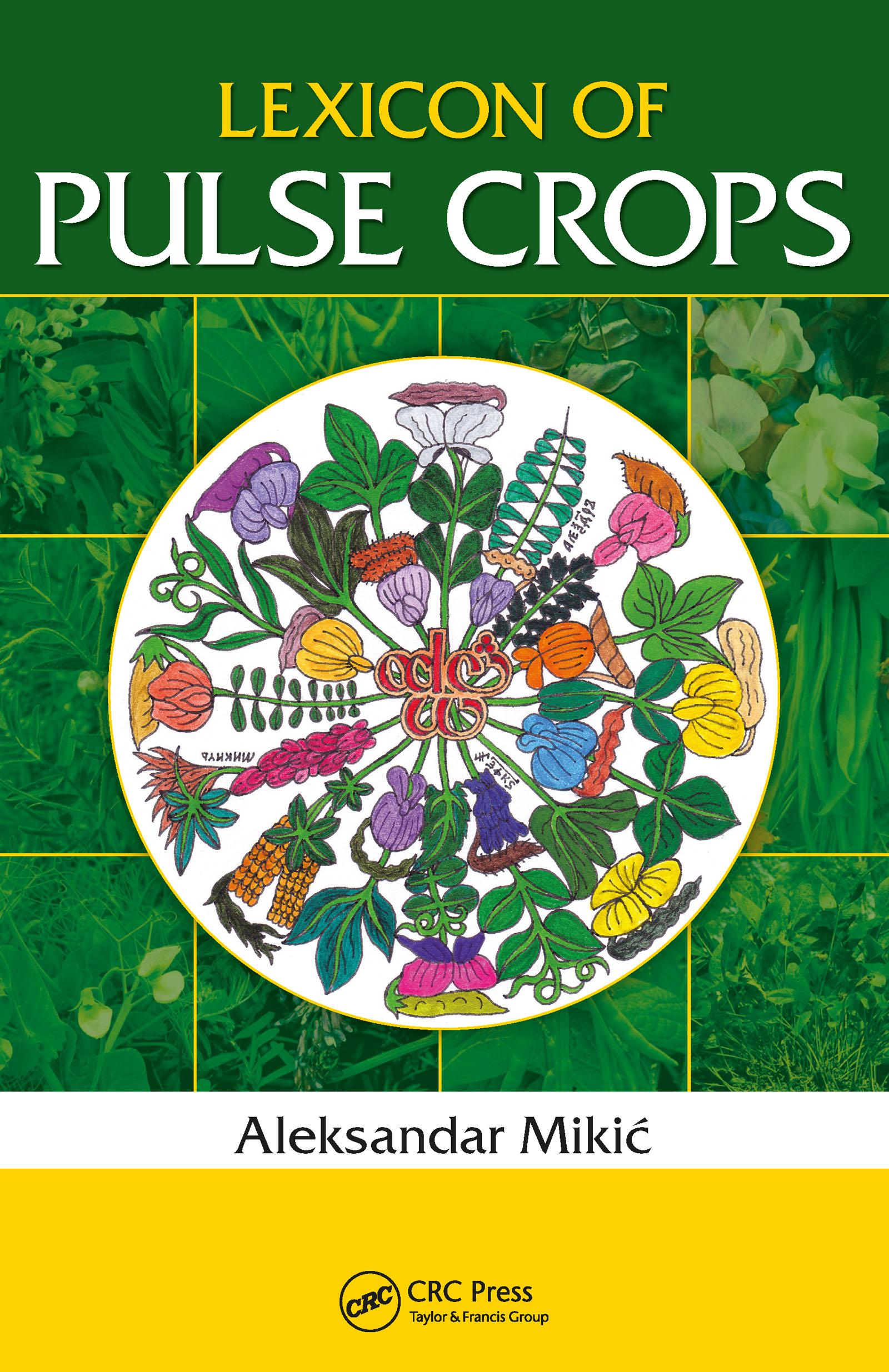
Lexicon of Pulse Crops integrates botanical and linguistic data to analyze and interpret the grain legume significance from the earliest archaeological and written records until the present day. Aimed at both agronomic and linguistic research communities, this book presents a database containing 9,500 common names in more than 900 languages and dialects of all ethnolinguistic families, denoting more than 1,100 botanical taxa of 14 selected pulse crop genera and species.
The book begins with overviews of the world’s economically most important grain legume crops and their uncultivated relatives, as well as the world’s language families with their inner structure, including both extinct and living members. The main section of the text presents 14 specialized book chapters covering Arachis, Cajanus, Cicer, Ervum, Faba, Glycine, Lablab, Lathyrus, Lens, Lupinus, Phaseolus, Pisum, Vicia, and Vigna. They provide the reader with extensive lists of the botanically accepted species and subtaxa and surveys lexicological abundance in all world’s ethnolinguistic families, comprising extinct and living as well as natural and constructed languages, while the vernacular names for the most significant taxa are presented in comprehensive tables. Each of these chapters also presents the existing etymologies and novel approaches to deciphering the origins of common names, accompanied by one original color plate depicting possible root evolutions in the form of corresponding pulse crop plants.
Betal nemt med kort, Klarna, Apple Pay eller Google Pay. Ikke tilfreds? Du har altid 14 dages fortrydelsesret. Læs mere i vores vilkår. Har du spørgsmål, så send os en mail på hello@memmo.org.
Memmo gør det nemmere at studere – uanset hvor du er i verden. Hos os samler du dine kursusbøger og smarte studieværktøjer ét sted: resuméer, quizzer, podcasts og flashcards. Og så er der Ted, din studieven, der svarer på alt, du undrer dig over. Over 50 000 studerende studerer allerede her – bygget til at hjælpe dig med at lære hurtigere og stresse mindre.