
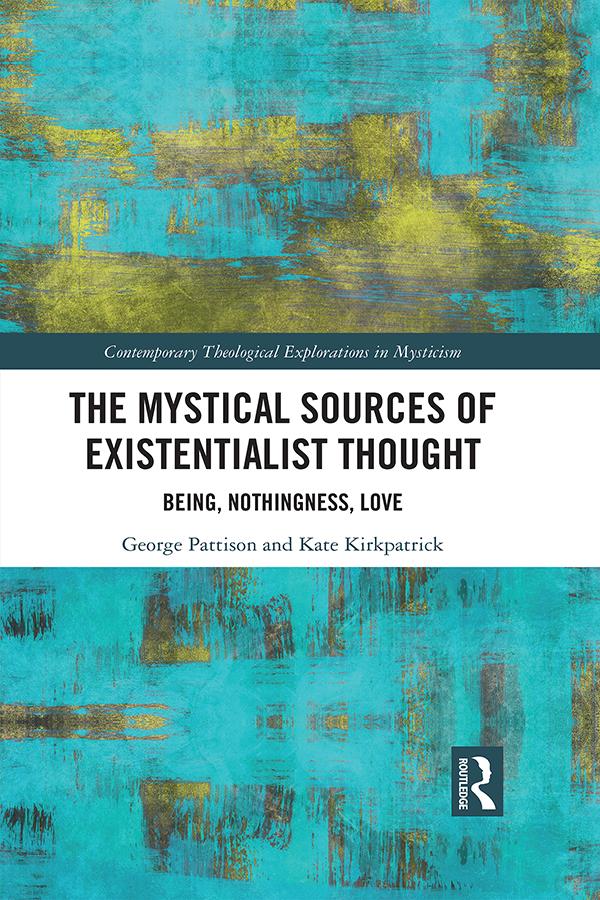
At the time when existentialism was a dominant intellectual and cultural force, a number of commentators observed that some of the language of existential philosophy, not least its interpretation of human existence in terms of nothingness, evoked the language of so-called mystical writers. This book takes on this observation and explores the evidence for the influence of mysticism on the philosophy of existentialism.
It begins by delving into definitions of mysticism and existentialism, and then traces the elements of mysticism present in German and French thought during the late nineteenth and early twentieth centuries. The book goes on to make original contributions to the study of figures including Kierkegaard, Buber, Heidegger, Beauvoir, Sartre, Marcel, Camus, Weil, Bataille, Berdyaev, and Tillich, linking their existentialist philosophy back to some of the key concerns of the mystical tradition.
Providing a unique insight into how these two areas have overlapped and interacted, this study is vital reading for any academic with an interest in twentieth-century philosophy, theology and religious studies.
Betal nemt med kort, Klarna, Apple Pay eller Google Pay. Ikke tilfreds? Du har altid 14 dages fortrydelsesret. Læs mere i vores vilkår. Har du spørgsmål, så send os en mail på hello@memmo.org.
Memmo gør det nemmere at studere – uanset hvor du er i verden. Hos os samler du dine kursusbøger og smarte studieværktøjer ét sted: resuméer, quizzer, podcasts og flashcards. Og så er der Ted, din studieven, der svarer på alt, du undrer dig over. Over 50 000 studerende studerer allerede her – bygget til at hjælpe dig med at lære hurtigere og stresse mindre.