
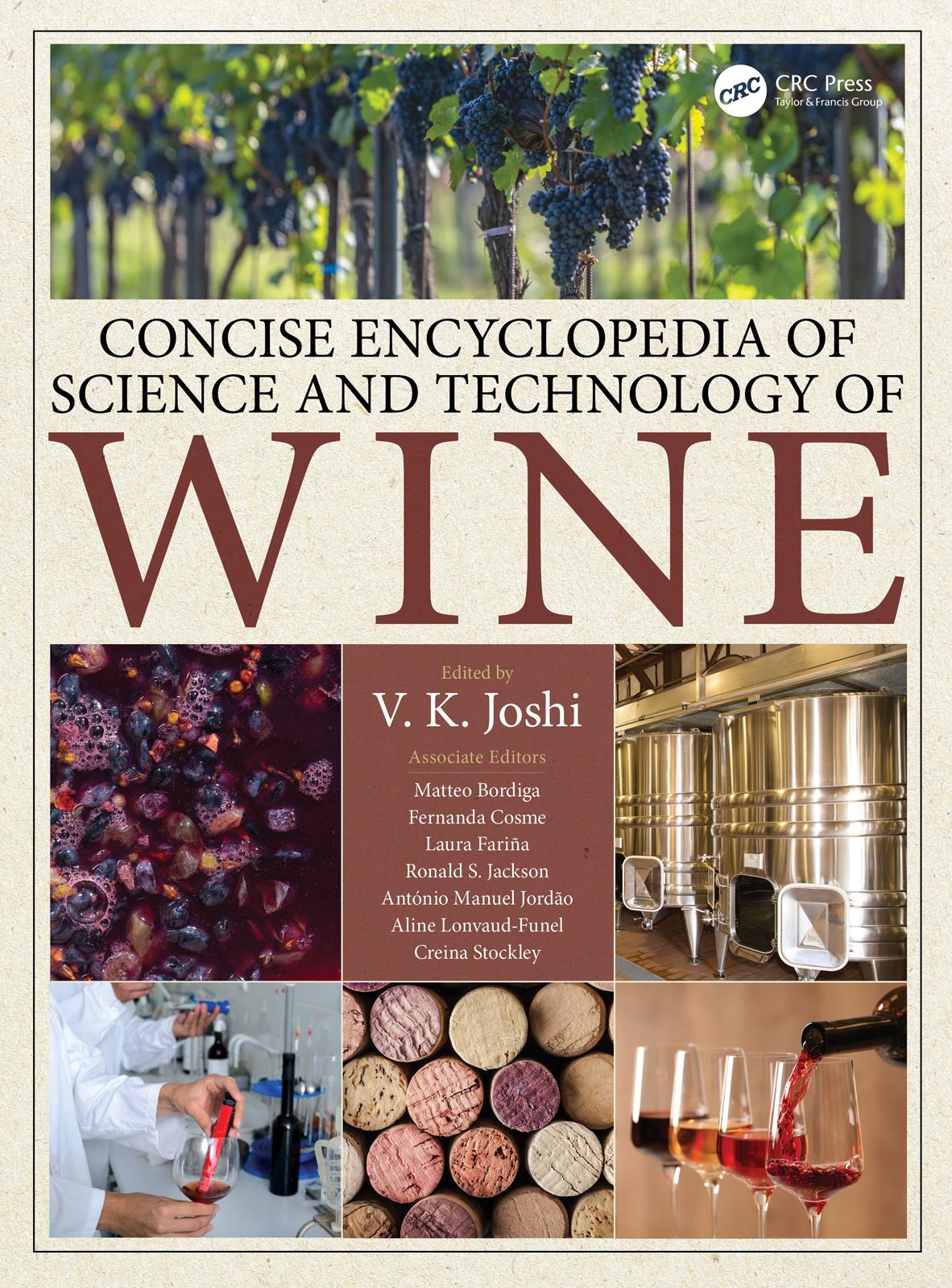
When asking the question what is wine? there are various ways to answer. Wine is extolled as a food, a social lubricant, an antimicrobial and antioxidant, and a product of immense economic significance. But there is more to it than that. When did humans first start producing wine and what are its different varieties? Are wines nutritious or have any therapeutic values—do they have any role in health or are they simply intoxicating beverages? How are their qualities determined or marketed and how are these associated with tourism? Concise Encyclopedia of Science and Technology of Wine attempts to answer all these questions and more.
This book reveals state-of-the-art technology of winemaking, describing various wine regions of the world and different cultivars used in winemaking. It examines microbiology, biochemistry, and engineering in the context of wine production. The sensory qualities of wine and brandy are explored, and the composition, nutritive and therapeutic values, and toxicity are summarized. Selected references at the end of each chapter provide ample opportunity for additional study.
Key Features:
- Elaborates on the recent trends of control and modeling of wine and the techniques used in the production of different wines and brandies
- Focuses on the application of biotechnology, especially genetic engineering of yeast, bioreactor technological concepts, enzymology, microbiology, killer yeast, stuck and sluggish fermentation, etc
- Illustrates the biochemical basis of wine production including malolactic fermentation
- Examines marketing, tourism, and the present status of the wine industry
Concise Encyclopedia of Science and Technology of Wine contains the most comprehensive, yet still succinct, collection of information on the science and technology of winemaking. With 45 chapters contributed by leading experts in their fields, it is an indispensable treatise offering extensive details of the processes of winemaking. The book is an incomparable resource for oenologists, food scientists, biotechnologists, postharvest technologists, biochemists, fermentation technologists, nutritionists, chemical engineers, microbiologists, toxicologists, organic chemists, and the undergraduate and postgraduate students of these disciplines.
Betal nemt med kort, Klarna, Apple Pay eller Google Pay. Ikke tilfreds? Du har altid 14 dages fortrydelsesret. Læs mere i vores vilkår. Har du spørgsmål, så send os en mail på hello@memmo.org.
Memmo gør det nemmere at studere – uanset hvor du er i verden. Hos os samler du dine kursusbøger og smarte studieværktøjer ét sted: resuméer, quizzer, podcasts og flashcards. Og så er der Ted, din studieven, der svarer på alt, du undrer dig over. Over 50 000 studerende studerer allerede her – bygget til at hjælpe dig med at lære hurtigere og stresse mindre.