
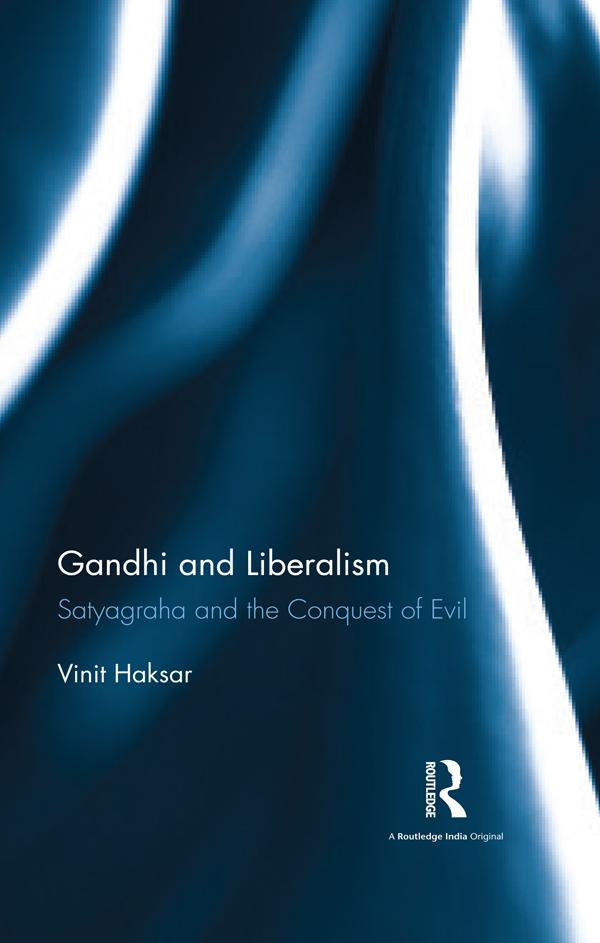
One of the main themes running through Gandhi’s life and work was the battle against evil. This book offers a fascinating reconstruction of Gandhi and the doctrine of Ahimsa or non-violence. Gandhi’s moral perfectionism is contrasted with other forms of perfectionism, but the book stresses that Gandhi also offered a doctrine of the second best. Following Gandhi, the author argues that outward violence with compassion is intrinsically not as good as non-violence with compassion, but it is a second best that is sometimes a necessary evil in an imperfect world. The book provides an illuminating analysis of coercion, non-co-operation, civil disobedience and necessary evil, comparing Gandhi’s ideas with that of some of the leading western moral, legal and political philosophers. Further, some of his important ideas are shown to have relevance for the working of the Indian Constitution.
This book will be essential for scholars and researchers in moral, legal and political philosophy, Gandhi studies, political science and South Asian studies.
Betal nemt med kort, Klarna, Apple Pay eller Google Pay. Ikke tilfreds? Du har altid 14 dages fortrydelsesret. Læs mere i vores vilkår. Har du spørgsmål, så send os en mail på hello@memmo.org.
Memmo gør det nemmere at studere – uanset hvor du er i verden. Hos os samler du dine kursusbøger og smarte studieværktøjer ét sted: resuméer, quizzer, podcasts og flashcards. Og så er der Ted, din studieven, der svarer på alt, du undrer dig over. Over 50 000 studerende studerer allerede her – bygget til at hjælpe dig med at lære hurtigere og stresse mindre.