
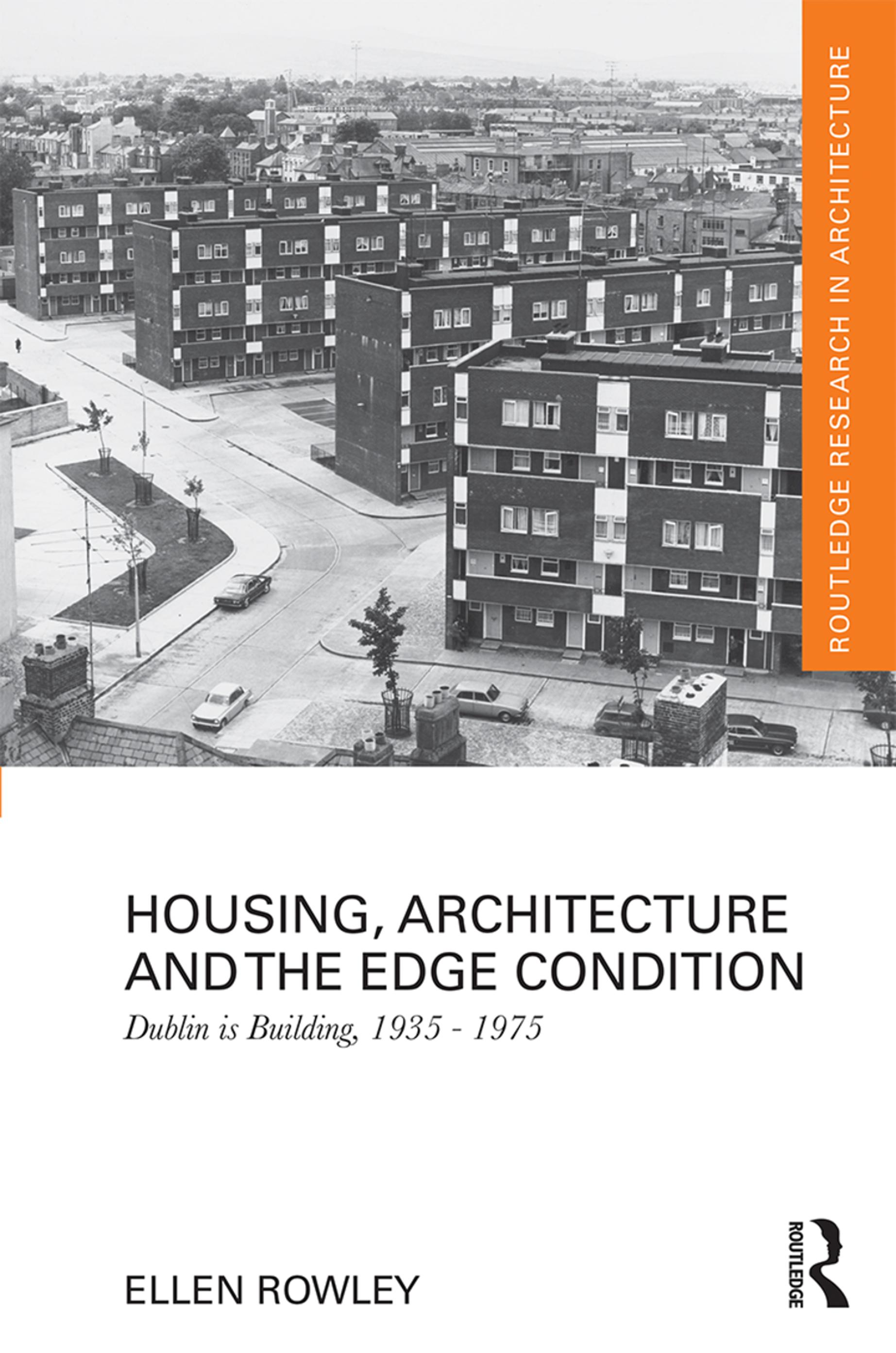
This book presents an architectural overview of Dublin’s mass-housing building boom from the 1930s to the 1970s. During this period, Dublin Corporation built tens of thousands of two-storey houses, developing whole communities from virgin sites and green fields at the city’s edge, while tentatively building four-storey flat blocks in the city centre. Author Ellen Rowley examines how and why this endeavour occurred. Asking questions around architectural and urban obsolescence, she draws on national political and social histories, as well as looking at international architectural histories and the influence of post-war reconstruction programmes in Britain or the symbolisation of the modern dwelling within the formation of the modern nation.
Critically, the book tackles this housing history as an architectural and design narrative. It explores the role of the architectural community in this frenzied provision of housing for the populace. Richly illustrated with architectural drawings and photographs from contemporary journals and the private archives of Dublin-based architectural practices, this book will appeal to academics and researchers interested in the conditions surrounding Dublin’s housing history.
Betal nemt med kort, Klarna, Apple Pay eller Google Pay. Ikke tilfreds? Du har altid 14 dages fortrydelsesret. Læs mere i vores vilkår. Har du spørgsmål, så send os en mail på hello@memmo.org.
Memmo gør det nemmere at studere – uanset hvor du er i verden. Hos os samler du dine kursusbøger og smarte studieværktøjer ét sted: resuméer, quizzer, podcasts og flashcards. Og så er der Ted, din studieven, der svarer på alt, du undrer dig over. Over 50 000 studerende studerer allerede her – bygget til at hjælpe dig med at lære hurtigere og stresse mindre.