
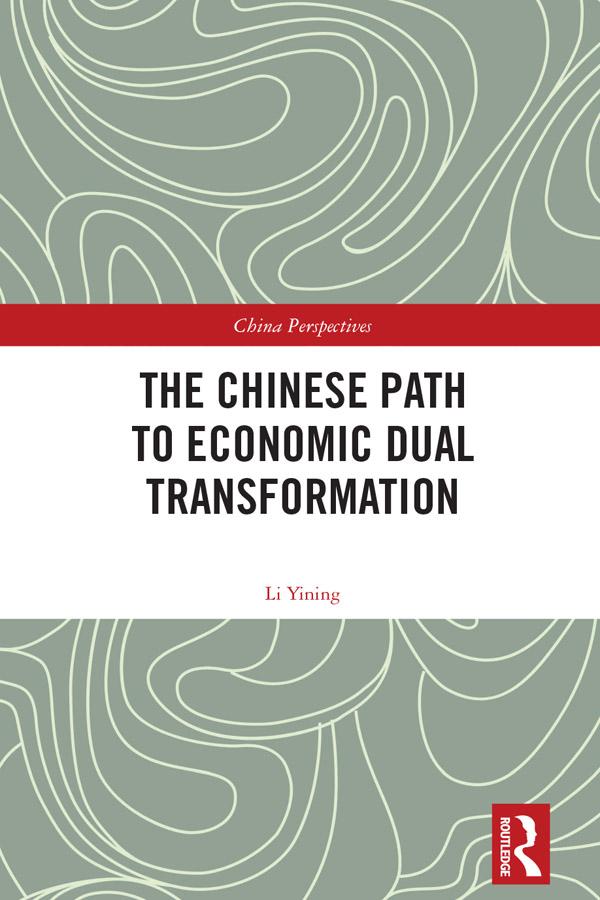
Economic transformation in traditional development economics refers to the transition from an agricultural society to an industrial one. Based on the practical conditions and the experience since reform and opening up in the late 1970s, the author observes that the path China's economy takes is a dual transformation, namely, developmental transformation from an agricultural society to an industrial economy, and institutional transformation from planned economy to market economy.
Centering on property ownership reform which is the supreme reform of the dual transformation, this book discusses land ownership approval, stock-holding system reform and the maintaining ownership of private enterprises, etc. Besides, the book expounds on the urbanization in China, believing that it is not only the outcome of the dual transformation but also the booster that will help China's economy continue to develop at a high speed. Independent innovation and industrial upgrading which is the key to the enhancement of enterprises' competitiveness is also covered.
The combination or overlapping of the two types of transformations in China has had no precedent in history, and it has not been discussed in traditional development economics. Scholars and students in China's economic studies and development economics studies will be attracted by this book. In addition, this book will be a valuable reference for other developing countries which are undergoing economic transformation.
Betal nemt med kort, Klarna, Apple Pay eller Google Pay. Ikke tilfreds? Du har altid 14 dages fortrydelsesret. Læs mere i vores vilkår. Har du spørgsmål, så send os en mail på hello@memmo.org.
Memmo gør det nemmere at studere – uanset hvor du er i verden. Hos os samler du dine kursusbøger og smarte studieværktøjer ét sted: resuméer, quizzer, podcasts og flashcards. Og så er der Ted, din studieven, der svarer på alt, du undrer dig over. Over 50 000 studerende studerer allerede her – bygget til at hjælpe dig med at lære hurtigere og stresse mindre.