
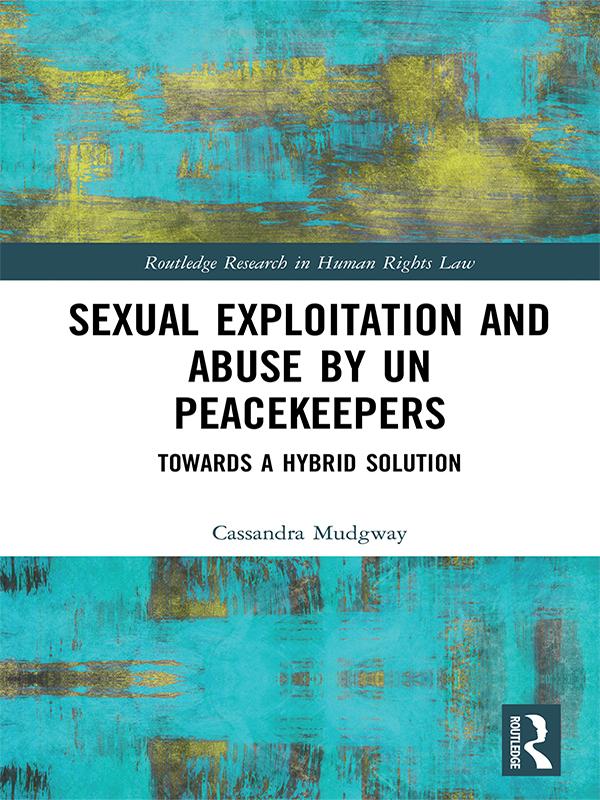
Sexual exploitation and abuse by United Nations (UN) peacekeepers is not an isolated or recent problem, but it has been present in almost every peacekeeping operation. A culture of sexual exploitation and abuse is contrary to the UN’s zero-tolerance policy and has been the target of institutional reforms since 2005. Despite this, allegations of sexual abuse continue to emerge, and the reforms have not solved the problem. This book is a response to the continued lack of accountability of UN peacekeepers for sexual exploitation and abuse. Focusing on military contingent members, this book aims to analyse ways in which the UN can fill the accountability gap while taking a feminist perspective and emphasising the needs of victims, their communities, and the host state.
This book directly challenges the status quo of relying on troop-contributing countries (TCCs) to hold their peacekeepers to account. It proposes first, the establishment of a series of hybrid courts, and second, a mechanism for dealing with victim rehabilitation and reparation. It addresses these topics by considering international and human rights law and will be of interest to researchers, academics, policymakers, and students with an interest in international criminal law, United Nations peacekeeping, and peace studies.
Betal nemt med kort, Klarna, Apple Pay eller Google Pay. Ikke tilfreds? Du har altid 14 dages fortrydelsesret. Læs mere i vores vilkår. Har du spørgsmål, så send os en mail på hello@memmo.org.
Memmo gør det nemmere at studere – uanset hvor du er i verden. Hos os samler du dine kursusbøger og smarte studieværktøjer ét sted: resuméer, quizzer, podcasts og flashcards. Og så er der Ted, din studieven, der svarer på alt, du undrer dig over. Over 50 000 studerende studerer allerede her – bygget til at hjælpe dig med at lære hurtigere og stresse mindre.