
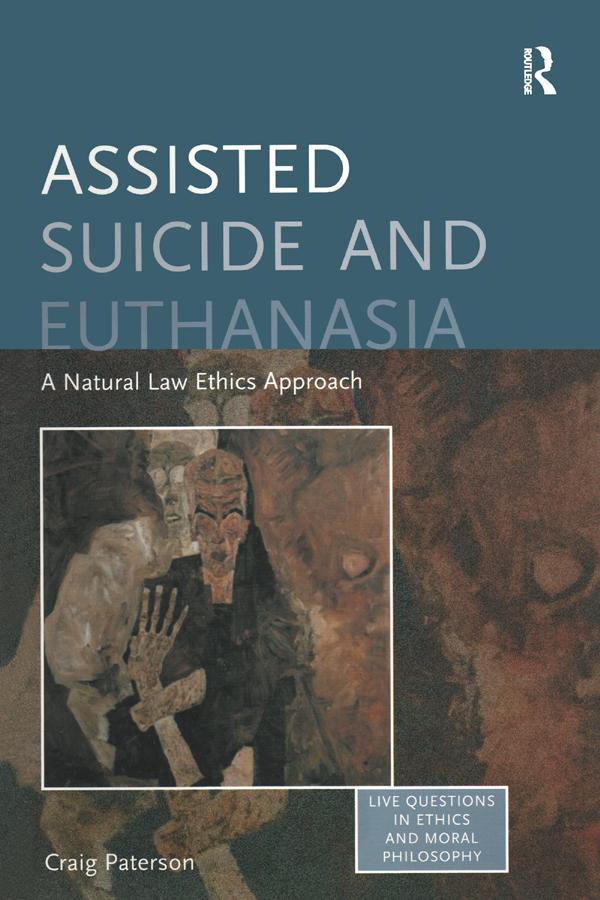
As medical technology advances and severely injured or ill people can be kept alive and functioning long beyond what was previously medically possible, the debate surrounding the ethics of end-of-life care and quality-of-life issues has grown more urgent.In this lucid and vigorous new book, Craig Paterson discusses assisted suicide and euthanasia from a fully fledged but non-dogmatic secular natural law perspective. He rehabilitates and revitalises the natural law approach to moral reasoning by developing a pluralistic account of just why we are required by practical rationality to respect and not violate key demands generated by the primary goods of persons, especially human life.Important issues that shape the moral quality of an action are explained and analysed: intention/foresight; action/omission; action/consequences; killing/letting die; innocence/non-innocence; and, person/non-person. Paterson defends the central normative proposition that 'it is always a serious moral wrong to intentionally kill an innocent human person, whether self or another, notwithstanding any further appeal to consequences or motive'.
Betal nemt med kort, Klarna, Apple Pay eller Google Pay. Ikke tilfreds? Du har altid 14 dages fortrydelsesret. Læs mere i vores vilkår. Har du spørgsmål, så send os en mail på hello@memmo.org.
Memmo gør det nemmere at studere – uanset hvor du er i verden. Hos os samler du dine kursusbøger og smarte studieværktøjer ét sted: resuméer, quizzer, podcasts og flashcards. Og så er der Ted, din studieven, der svarer på alt, du undrer dig over. Over 50 000 studerende studerer allerede her – bygget til at hjælpe dig med at lære hurtigere og stresse mindre.
Du kan måske også lide
Køb bogen0