
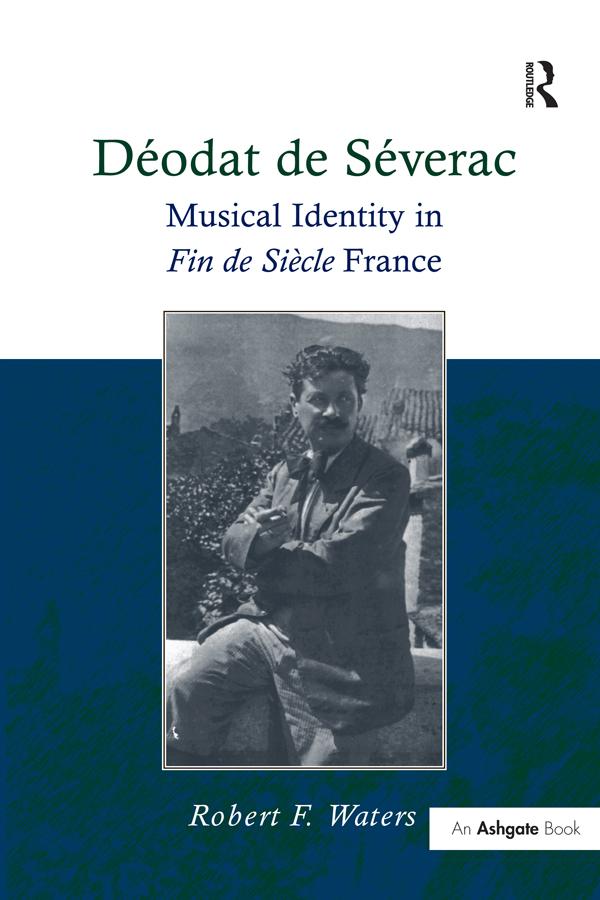
D�at de S�rac (1872-1921) is best known for his piano music but his compositions included orchestral and vocal works, including opera, cantata and incidental music. Claude Debussy described S�rac's music as "exquisite and rich with ideas." The early works were influenced by Impressionist harmonies, church modes, cyclic techniques, folk-like melodies and Andalusian motives. S�rac's style changed dramatically in 1907 when he left Paris and began to include Catalan elements in his compositions - a transition that has hitherto gone unrecognized. Robert Waters provides a much-needed study of the life and works of S�rac, focusing on the composer's regionalist philosophy. S�rac's engagement with folk music was not a patriotic gesture in the vein of nationalistic composers, but a way of expressing regional identity within France to counter the restrictive styles sanctioned by the Paris Conservatory. His musical philosophy mirrored larger social and political debates regarding anti-centralist positions on education, politics, art and culture in fin de siecle France. Such debates involved political and social leaders whom S�rac knew and personally admired, including the writer Maurice Barr�and the poet Fr�ric Mistral. The book will appeal to those specializing in French music, European ethnic musics, piano music and French music history.
Betal nemt med kort, Klarna, Apple Pay eller Google Pay. Ikke tilfreds? Du har altid 14 dages fortrydelsesret. Læs mere i vores vilkår. Har du spørgsmål, så send os en mail på hello@memmo.org.
Memmo gør det nemmere at studere – uanset hvor du er i verden. Hos os samler du dine kursusbøger og smarte studieværktøjer ét sted: resuméer, quizzer, podcasts og flashcards. Og så er der Ted, din studieven, der svarer på alt, du undrer dig over. Over 50 000 studerende studerer allerede her – bygget til at hjælpe dig med at lære hurtigere og stresse mindre.
Du kan måske også lide
Køb bogen0