
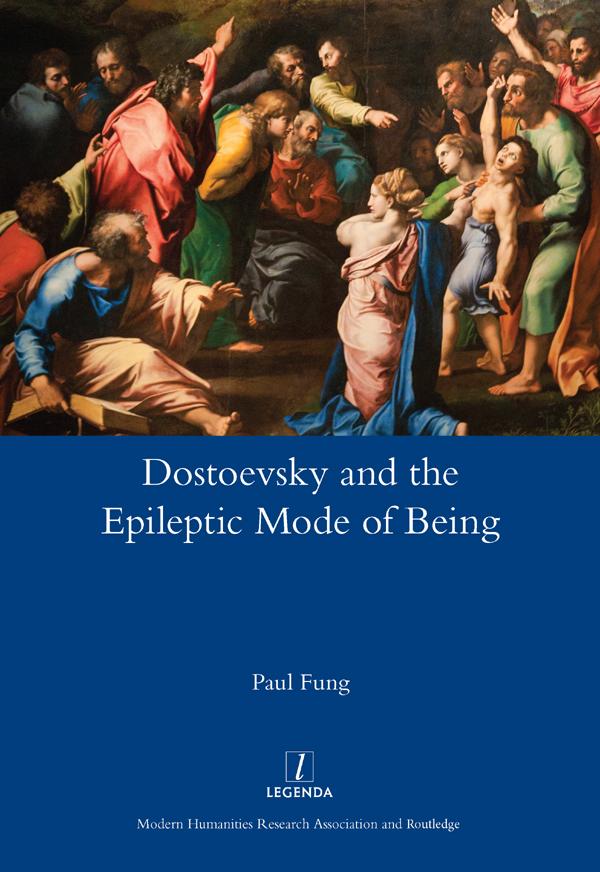
For Fyodor Dostoevsky (1821-81), who lived with epileptic seizures for more than thirty years, illness is an ineradicable part of existence. Epilepsy in his writings denotes both a set of physical symptoms and a state of survival in which the protagonists incessantly try to articulate, theorize, or master what is ungraspable in their everyday experience. Their attempts to deal with what they cannot control or comprehend results in disappointment, or what Dostoevsky called a mystical terror. Dostoevsky's heroes are unable fully to understand this state, and their existence becomes 'epileptic' in so far as self-knowledge and self-coincidence are never achieved. Fung explores new critical pathways by reexamining five of Dostoevsky's post-Siberian novels. Drawing on insights from writers including Benjamin, Blanchot, Freud, Lacan and Nietzsche, the book takes epilepsy as a trope for discussing the unspeakable moments in the texts, and is intended for students and scholars who are interested in the subject of modernity, critique of the visual, and dialogues between philosophy and literature. Paul Fung is Assistant Professor in English at Hang Seng Management College, Hong Kong.
Betal nemt med kort, Klarna, Apple Pay eller Google Pay. Ikke tilfreds? Du har altid 14 dages fortrydelsesret. Læs mere i vores vilkår. Har du spørgsmål, så send os en mail på hello@memmo.org.
Memmo gør det nemmere at studere – uanset hvor du er i verden. Hos os samler du dine kursusbøger og smarte studieværktøjer ét sted: resuméer, quizzer, podcasts og flashcards. Og så er der Ted, din studieven, der svarer på alt, du undrer dig over. Over 50 000 studerende studerer allerede her – bygget til at hjælpe dig med at lære hurtigere og stresse mindre.
Du kan måske også lide
Køb bogen0