
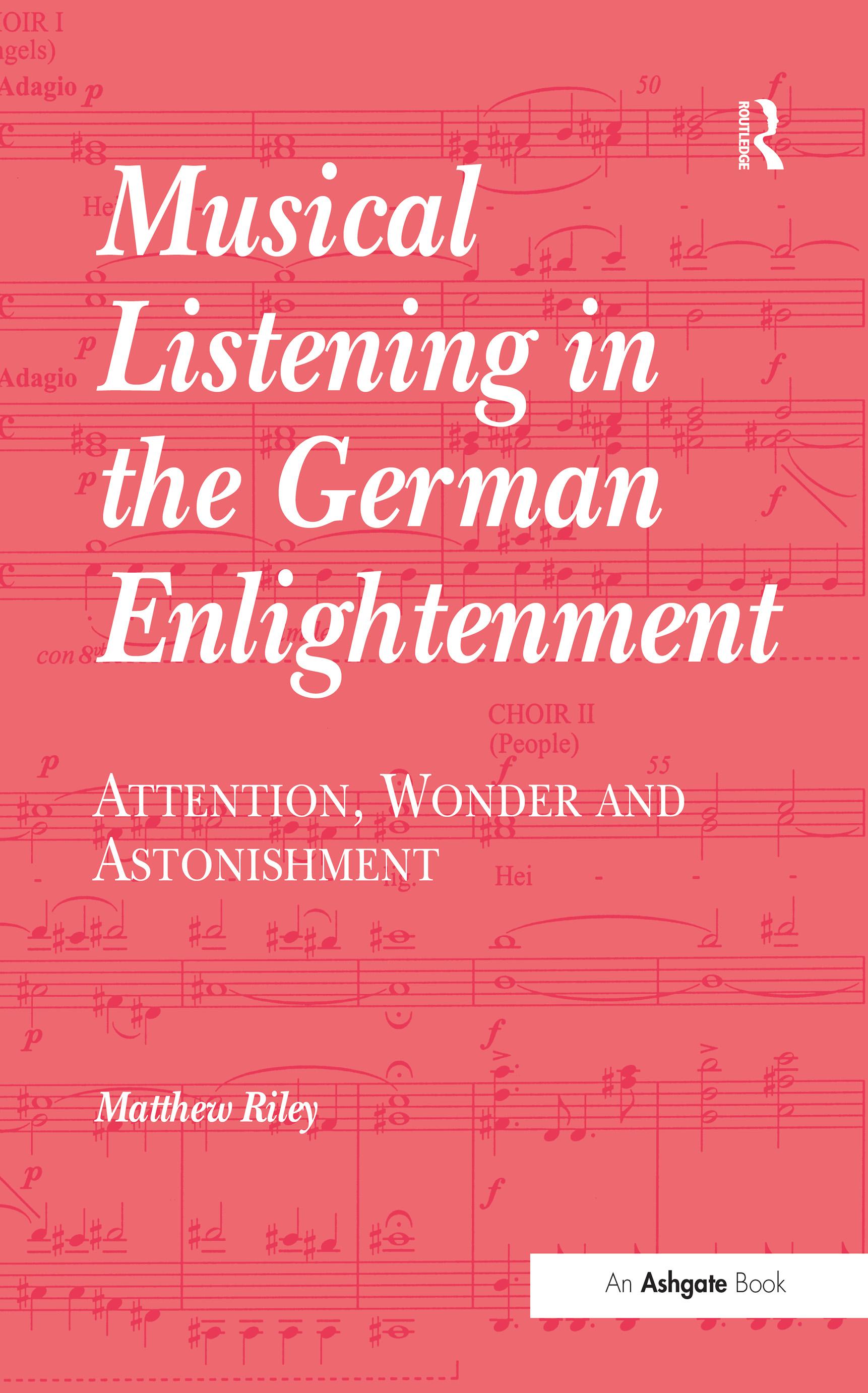
The silent attentiveness expected of concert audiences is one of the most distinctive characteristics of modern Western musical culture. This is the first book to examine the concept of attention in the history of musical thought and its foundations in the writings of German musical commentators of the late eighteenth century. Those critics explained numerous technical features of the music of their time as devices for arousing, sustaining or otherwise influencing the attention of a listener, citing in illustration works by Gluck, C. P. E. Bach, Georg Benda and others. Two types of attention were identified: the uninterrupted experience of a single emotional state conveyed by a piece of music as a whole, and the fleeting sense of 'wonder' or 'astonishment' induced by a local event in a piece. The relative validity of these two modes was a topic of heated debate in the German Enlightenment, encompassing issues of musical communication, compositional integrity and listener competence. Matthew Riley examines the significant writers on the topic (Descartes, Leibniz, Wolff, Baumgarten, Rousseau, Meier, Sulzer and Forkel) and provides analytical case studies to illustrate how these perceived modes of attention shaped interpretations of music of the period.
Betal nemt med kort, Klarna, Apple Pay eller Google Pay. Ikke tilfreds? Du har altid 14 dages fortrydelsesret. Læs mere i vores vilkår. Har du spørgsmål, så send os en mail på hello@memmo.org.
Memmo gør det nemmere at studere – uanset hvor du er i verden. Hos os samler du dine kursusbøger og smarte studieværktøjer ét sted: resuméer, quizzer, podcasts og flashcards. Og så er der Ted, din studieven, der svarer på alt, du undrer dig over. Over 50 000 studerende studerer allerede her – bygget til at hjælpe dig med at lære hurtigere og stresse mindre.
Du kan måske også lide
Køb bogen0