
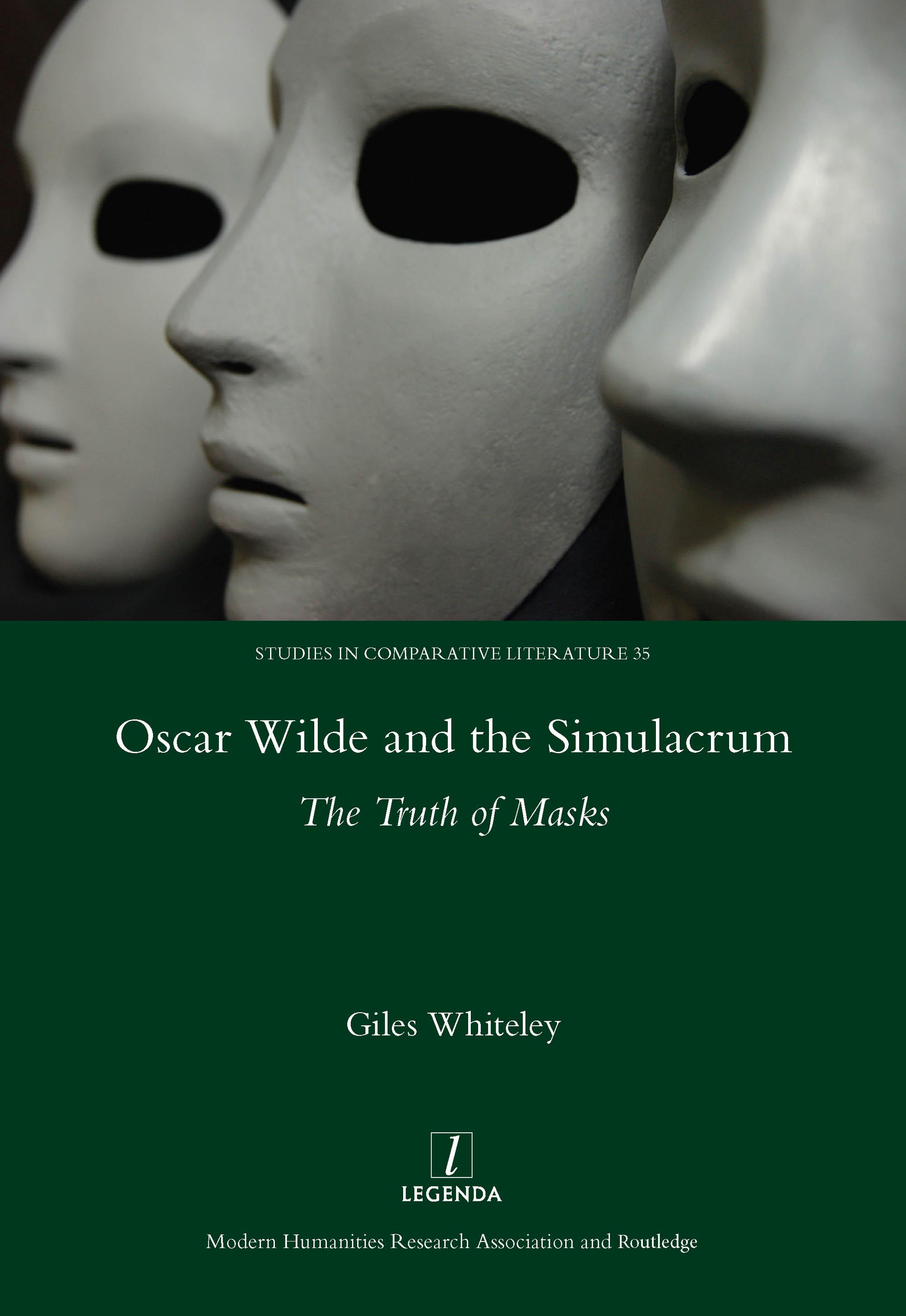
Oscar Wilde is more than a name, more than an author. From precocious Oxford undergraduate to cause celebre of the West End of the 1890s, to infamous criminal, the proper name Wilde has become an event in the history of literature and culture. Taking Wilde seriously as a philosopher in his own right, Whiteley's groundbreaking book places his texts into their philosophical context in order to show how Wilde broke from his peers, and in particular from idealism, and challenges recent neo-historicist readings of Wilde which seem content to limit his irruptive power. Using the paradoxical concept of the simulacrum to resituate Wilde's work in relation to both his precursors and his contemporaries, Whiteley's study reads Wilde through Deleuze and postmodern philosophical commentary on the simulacrum. In a series of striking juxtapositions, Whiteley challenges us to rethink both Oscar Wilde's aesthetics and his philosophy, to take seriously both the man and the mask. His philosophy of masks is revealed to figure a truth of a different kind - the simulacra through which Wilde begins to develop and formulate a mature philosophy that constitutes an ethics of joy.
Betal nemt med kort, Klarna, Apple Pay eller Google Pay. Ikke tilfreds? Du har altid 14 dages fortrydelsesret. Læs mere i vores vilkår. Har du spørgsmål, så send os en mail på hello@memmo.org.
Memmo gør det nemmere at studere – uanset hvor du er i verden. Hos os samler du dine kursusbøger og smarte studieværktøjer ét sted: resuméer, quizzer, podcasts og flashcards. Og så er der Ted, din studieven, der svarer på alt, du undrer dig over. Over 50 000 studerende studerer allerede her – bygget til at hjælpe dig med at lære hurtigere og stresse mindre.
Du kan måske også lide
Køb bogen0