
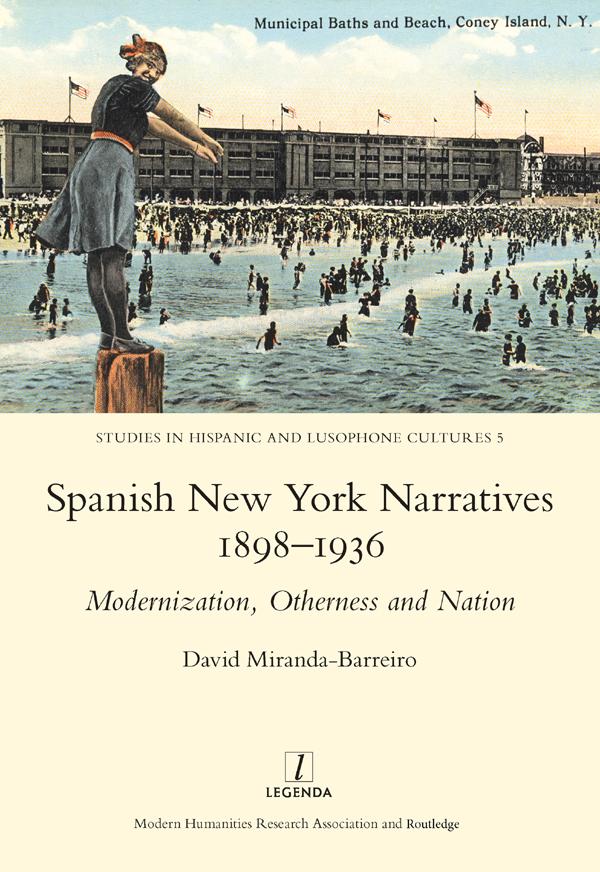
In the early decades of the twentieth century, New York caught the attention of Spanish writers. Many of them visited the city and returned to tell their experience in the form of a literary text. That is the case of Pruebas de Nueva York (1927) by Jose Moreno Villa (1887-1955), El crisol de las razas (1929) by Teresa de Escoriaza (1891-1968), Anticipolis (1931) by Luis de Oteyza (1883-1961) and La ciudad automatica (1932) by Julio Camba (1882-1962). In tune with similar representations in other European works, the image of New York given in these texts reflects the tensions and anxieties generated by the modernisation embodied by the United States. These authors project onto New York their concerns and expectations about issues of class, gender and ethnicity that were debated at the time, in the context of the crisis of Spanish national identity triggered by the end of the empire in 1898.
Betal nemt med kort, Klarna, Apple Pay eller Google Pay. Ikke tilfreds? Du har altid 14 dages fortrydelsesret. Læs mere i vores vilkår. Har du spørgsmål, så send os en mail på hello@memmo.org.
Memmo gør det nemmere at studere – uanset hvor du er i verden. Hos os samler du dine kursusbøger og smarte studieværktøjer ét sted: resuméer, quizzer, podcasts og flashcards. Og så er der Ted, din studieven, der svarer på alt, du undrer dig over. Over 50 000 studerende studerer allerede her – bygget til at hjælpe dig med at lære hurtigere og stresse mindre.
Du kan måske også lide
Køb bogen0