
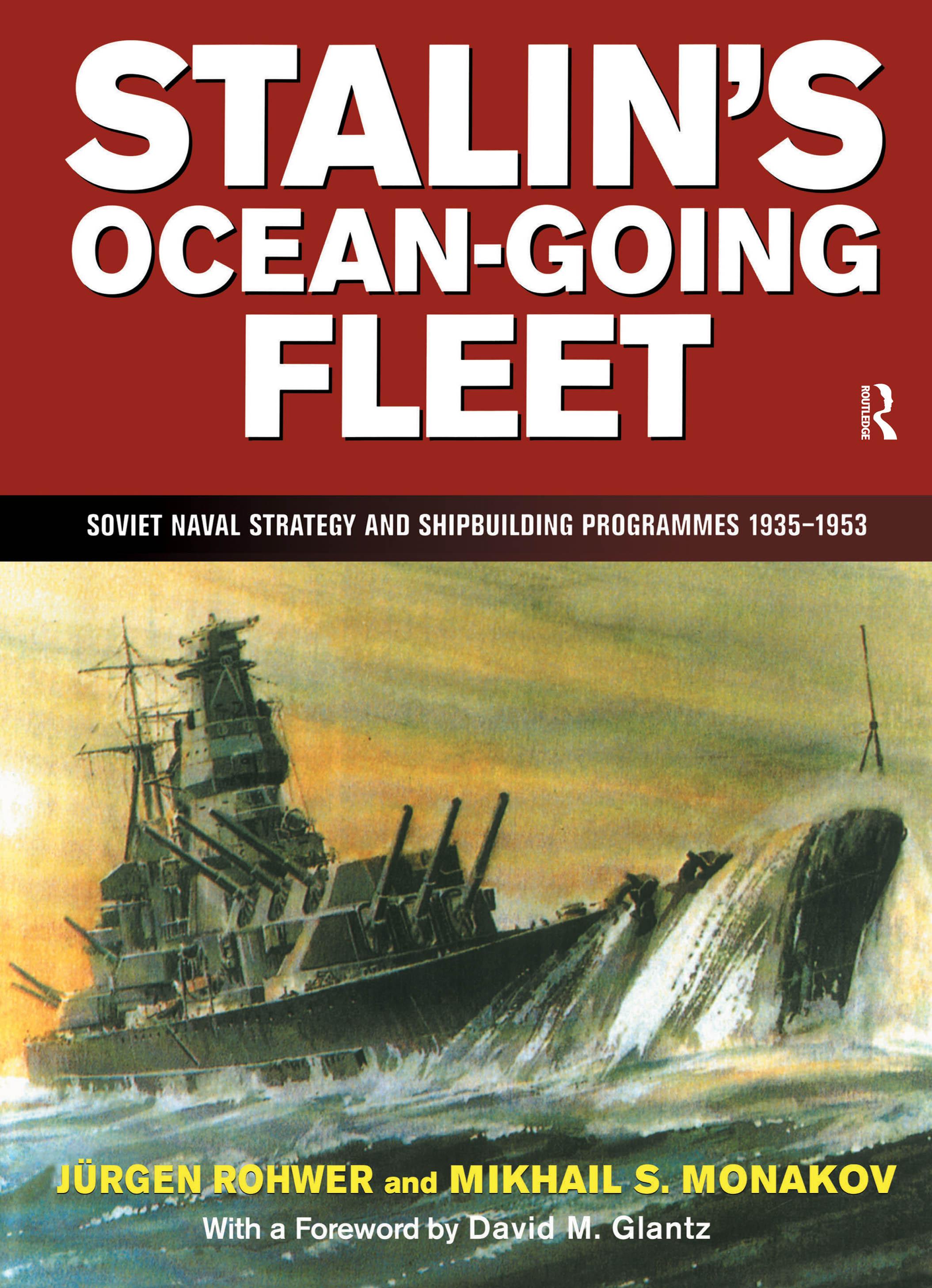
In this work, two senior naval historians analyze the discussions held in leading Soviet political, military, and naval circles concerning naval strategy and the decisions taken for warship-building programmes. They describe the reconstitution of the fleet under difficult conditions from the end of the Civil War up to the mid-1920s, leading to a change from classical naval strategy to a Jeune ecole model in the first two Five-Year Plans, including efforts to obtain foreign assistance in the design of warships and submarines. Their aim is to explain the reasons for the sudden change in 1935 to begin building a big ocean-going fleet. After a period of co-operation with Germany from 1939-41, the plans came to a halt when Hitler attacked the Soviet Union in 1941. Finally, this work covers the reopening of the naval planning processes in 1944 and 1945 and the discussions of the naval leadership with Stalin, the party and government officials about the direction of the new building programmes as the Cold War began.
Betal nemt med kort, Klarna, Apple Pay eller Google Pay. Ikke tilfreds? Du har altid 14 dages fortrydelsesret. Læs mere i vores vilkår. Har du spørgsmål, så send os en mail på hello@memmo.org.
Memmo gør det nemmere at studere – uanset hvor du er i verden. Hos os samler du dine kursusbøger og smarte studieværktøjer ét sted: resuméer, quizzer, podcasts og flashcards. Og så er der Ted, din studieven, der svarer på alt, du undrer dig over. Over 50 000 studerende studerer allerede her – bygget til at hjælpe dig med at lære hurtigere og stresse mindre.
Du kan måske også lide
Køb bogen0