
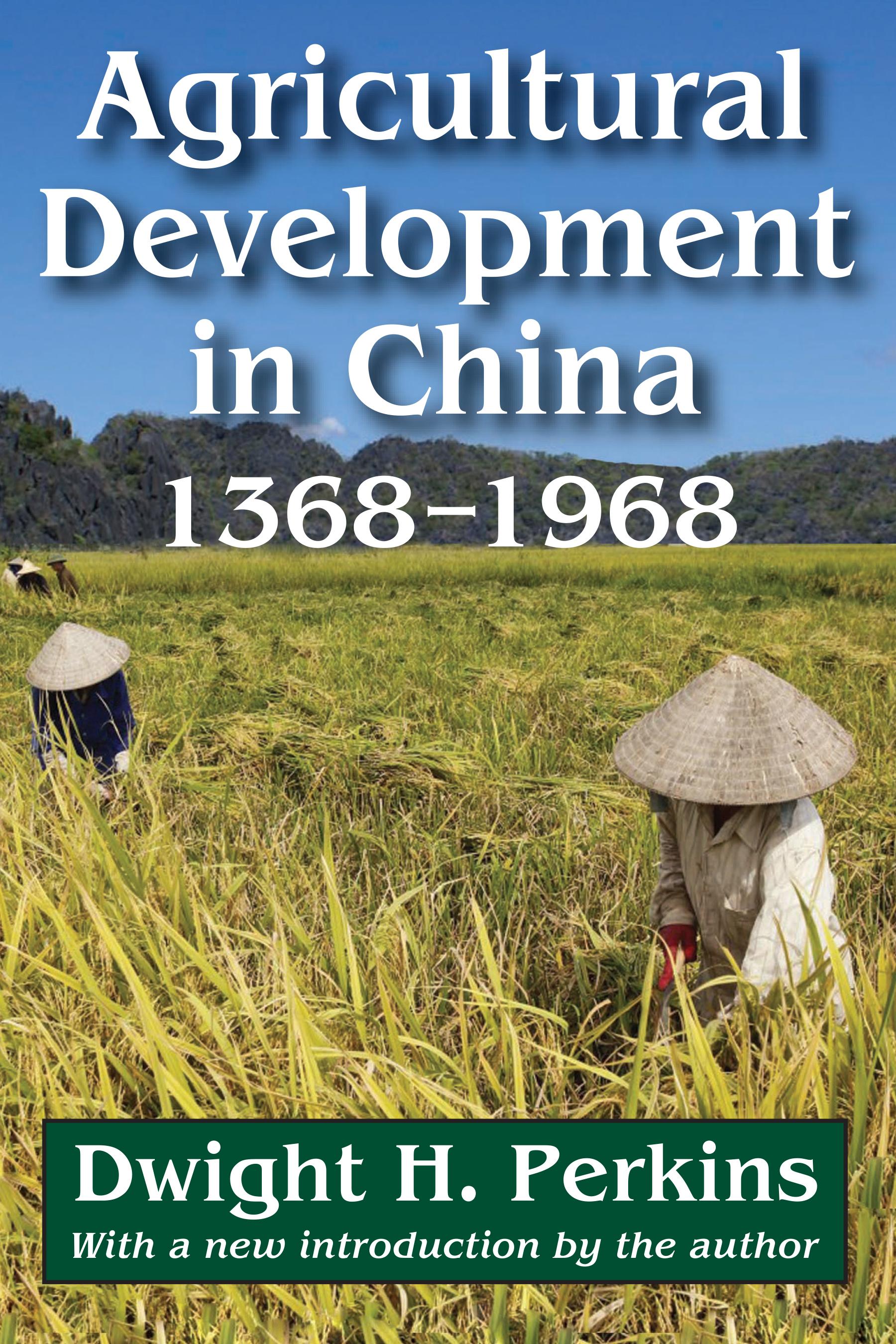
Agricultural Development in China explains how China's farm economy historically responded to the demands of a rising population. Dwight H. Perkins begins in the year A.D. 1368, the founding date of the Ming dynasty. More importantly, it marked the end of nearly two centuries of violent destruction and loss of life primarily connected with the rise and fall of the Mongols. The period beginning with the fourteenth century was also one in which there were no obvious or dramatic changes in farming techniques or in rural institutions. The rise in population and hence in the number of farmers made possible the rise in farm output through increased double cropping, extending irrigation systems, and much else.
Issues explored in this book include the role of urbanization and long distance trade in allowing farmers in a few regions to specialize in crops most suitable to their particular region. Backing up this analysis of agricultural development is a careful examination of the quality of Chinese historical data. This classic volume, now available in a paperback edition, includes a new introduction assessing the continuing importance of this work to understanding the Chinese economy. It will be invaluable for a new generation of economists, historians, and Asian studies specialists and is part of Transaction's Asian Studies series.
Betal nemt med kort, Klarna, Apple Pay eller Google Pay. Ikke tilfreds? Du har altid 14 dages fortrydelsesret. Læs mere i vores vilkår. Har du spørgsmål, så send os en mail på hello@memmo.org.
Memmo gør det nemmere at studere – uanset hvor du er i verden. Hos os samler du dine kursusbøger og smarte studieværktøjer ét sted: resuméer, quizzer, podcasts og flashcards. Og så er der Ted, din studieven, der svarer på alt, du undrer dig over. Over 50 000 studerende studerer allerede her – bygget til at hjælpe dig med at lære hurtigere og stresse mindre.