
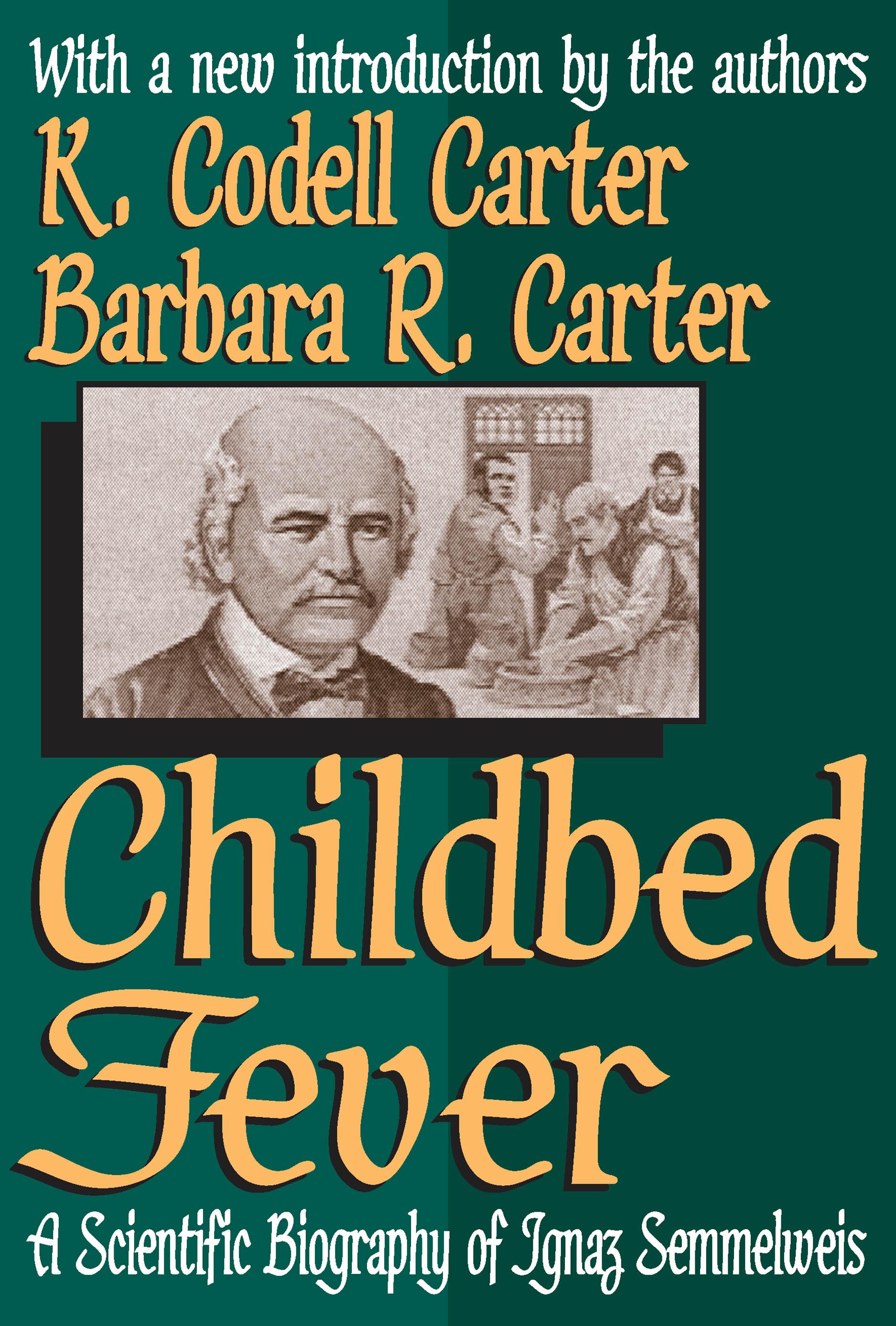
The life and work of Ignaz Semmelweis is among the most engaging and moving stories in the history of science. Childbed Fever makes the Semmelweis story available to a general audience, while placing his life, and his discovery, in the context of his times. In 1846 Vienna, as what would now be called a head resident of obstetrics, Semmelweis confronted the terrible reality of childbed fever, which killed prodigious numbers of women throughout Europe and America. In May 1847 Semmelweis was struck by the realization that, in his clinic, these women had probably been infected by the decaying remains of human tissue. He believed that infection occurred because medical personnel did not wash their hands thoroughly after conducting autopsies in the morgue. He immediately began requiring everyone working in his clinic to wash their hands in a chlorine solution. The mortality rate fell to about one percent. While everyone at the time rejected his account of the cause of the disease because his theory was fundamentally inconsistent with existing medical beliefs about how diseases were transmitted, in time Semmelweis was proven to be correct. His work led to the adoption of a new way of thinking about disease, thus helping to create an entirely new theory - the etiological standpoint - that still dominates medicine today.
Betal nemt med kort, Klarna, Apple Pay eller Google Pay. Ikke tilfreds? Du har altid 14 dages fortrydelsesret. Læs mere i vores vilkår. Har du spørgsmål, så send os en mail på hello@memmo.org.
Memmo gør det nemmere at studere – uanset hvor du er i verden. Hos os samler du dine kursusbøger og smarte studieværktøjer ét sted: resuméer, quizzer, podcasts og flashcards. Og så er der Ted, din studieven, der svarer på alt, du undrer dig over. Over 50 000 studerende studerer allerede her – bygget til at hjælpe dig med at lære hurtigere og stresse mindre.
Du kan måske også lide
Køb bogen0